Southern Portugal – Spring in the Algarve
After a quieter year last year, I was keen to get back to guiding full-time again, and my first opportunity came in March this year when I was asked to fill in for another guide on Greentours‘ spring tour of Southern Portugal. Whilst always a little daunting to fill someone else’s spot, and never a task you want to have to take for the sake of the other guide, sometimes these things come up, and so here I was. Thankfully, I was met by another co-leader who knew the tour well, and we had a wonderful week.
Having gathered the main group at the airport in Faro, we set out for our hotel near Alte. The weather was windy and overcast, but rain held off and so after settling in and having a brief introduction, we headed out for a walk before dinner. Immediately in the garden, we spotted our first orchids of the trip, a wonderful group of Ophrys bombyliflora and a couple of Serapias lingua, which we then found a whole lot more of in another section of the lawn. Iberian Green Frogs were calling, and one or two of the group got a fleeting glimpse of them before they dived for cover in the small pond.
Heading out of a back gate and along the lane from the hotel, we were immediately struck by the wealth of spring wildflowers to be seen. Common species and those ubiquitous in the Mediterranean, such as Glebionis coronarium, Bituminaria bituminosa and Salvia verbenaca were noted along with a few less frequently seen and more localised like Carduncellus caeruleus, Centaurea pullata and Aristolochia baetica.
My co-leader Hugo uncovered a locally endemic Maria’s Worm Lizard, Blanus mariae, not far from where we turned on to the track, and the group was able to get a good look at this extraordinary reptile which looks, as its name suggests, remarkably like a large Earthworm.
Returning carefully along the road, we found some more orchids too, with specimens of Ophrys fusca, Ophrys speculum and Ophrys lutea growing in the verges.
We returned to the hotel with time to warm up, relax and change before dinner. Hugo did not join us, but instead returned to Faro to collect the final two members of our party arriving on a later flight.
The following day dawned bright and sunny despite the high winds and heavy rain overnight. We gathered for breakfast and then headed out for our first full day, optimistic at the prospect of what lay in wait for us.

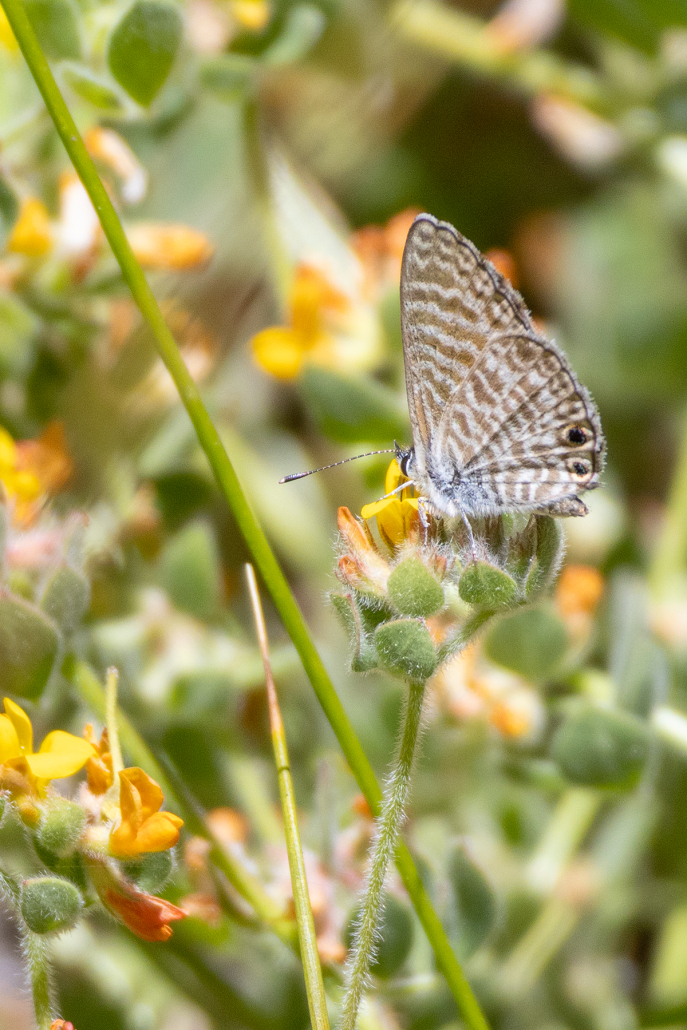
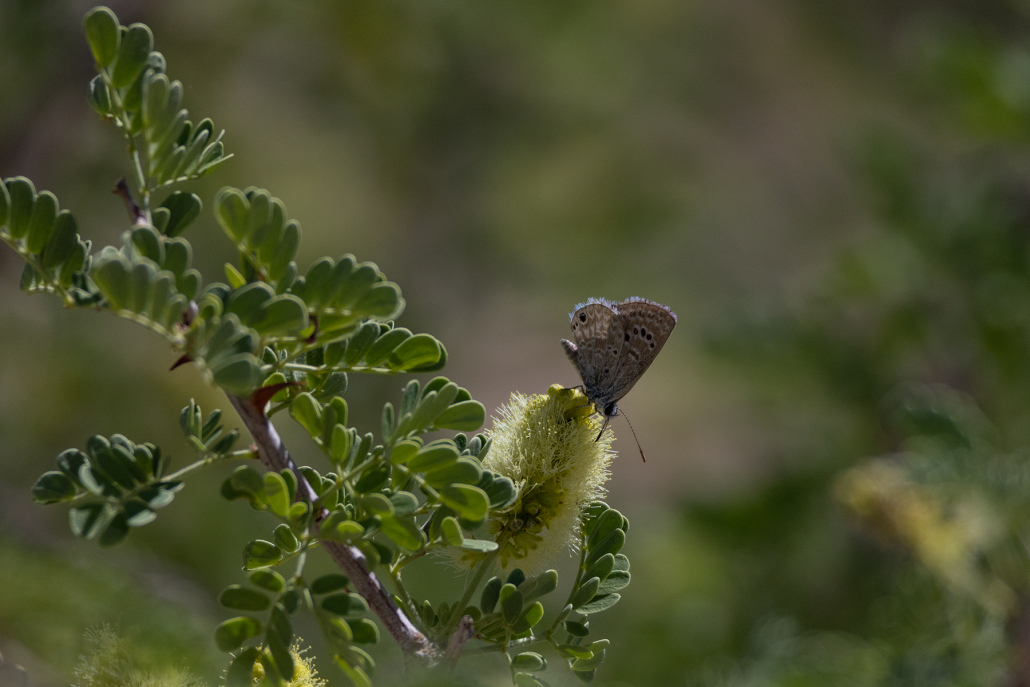
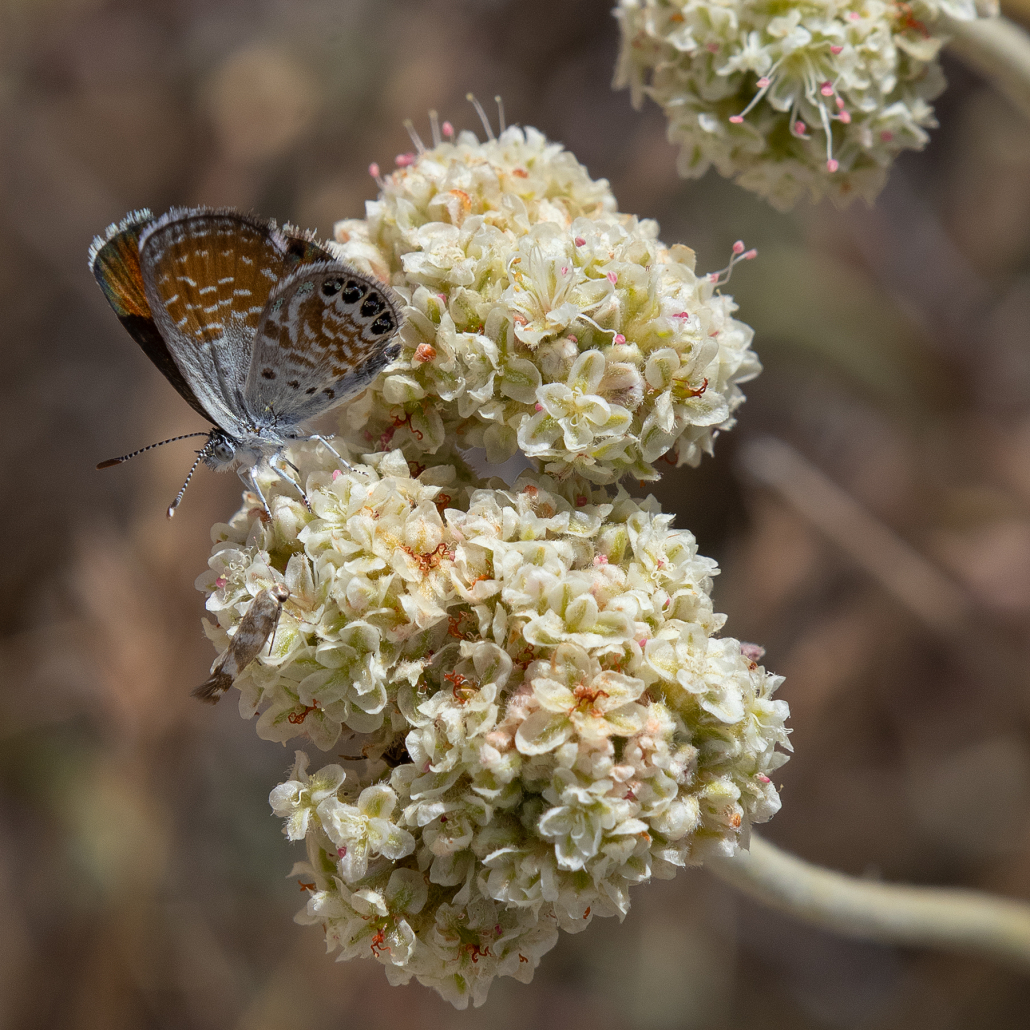
Black-eyed Blue
Our destination was Castelo de Paderne, situated on a hilltop commanding a view over a river valley below. The track on the way up to the castle had already looked promising, with orchids of several species sighted from the buses, so on parking we knew there would be plenty to find, and we were not disappointed. The species we had found on the roadside the evening before were numerous and joined by more Ophrys bombyliflora. Orchis italica was in profusion among stands of pink Cistus albidus, purple stands of Phlomis purpurea grew along the side of the track and among the Lavandula stoechas and Ulex europaeus there were yet more plants to be found, including Ophrys scolopax and Muscari neglectum. One of our group was particularly sharp-eyed in spotting the first of several Black-eyed Blues (Glaucopsyche melanops) on the Lavender too.
We walked back down the track we had driven up a short way to investigate some of the orchids seen from the vehicles to find Ophrys omegaifera ssp. dyris, Oprhys speculum ssp. lusitanica and a pair of Cephalathera longifolia in perfect condition.

Oprhys speculum ssp. lusitanica
Back by the vehicles, Hugo pointed out a dark form of Orchis italica growing near a lovely Paeonia broteroi and nearby, another group member found several Orchis anthropophora. A Blue Rock Thrush was admired on the top of the castle walls, and we saw Spanish Festoon and Western Dappled White butterflies below.
We had a brief snack before driving down into the valley below and parking up once more. We took our lunches with us for a walk along the river, where the vegetation was a little different. The river itself was high and fast-flowing after the recent rain, but the path was thankfully not affected.
The first section of the path yielded some attractive Aristolochia baetica, some pale Allium roseum specimens and with some lovely fresh Ophrys fusca, and then opened out to a small picnic area where most of us ate our lunches with Swallows and House Martins hawking for insects overhead.
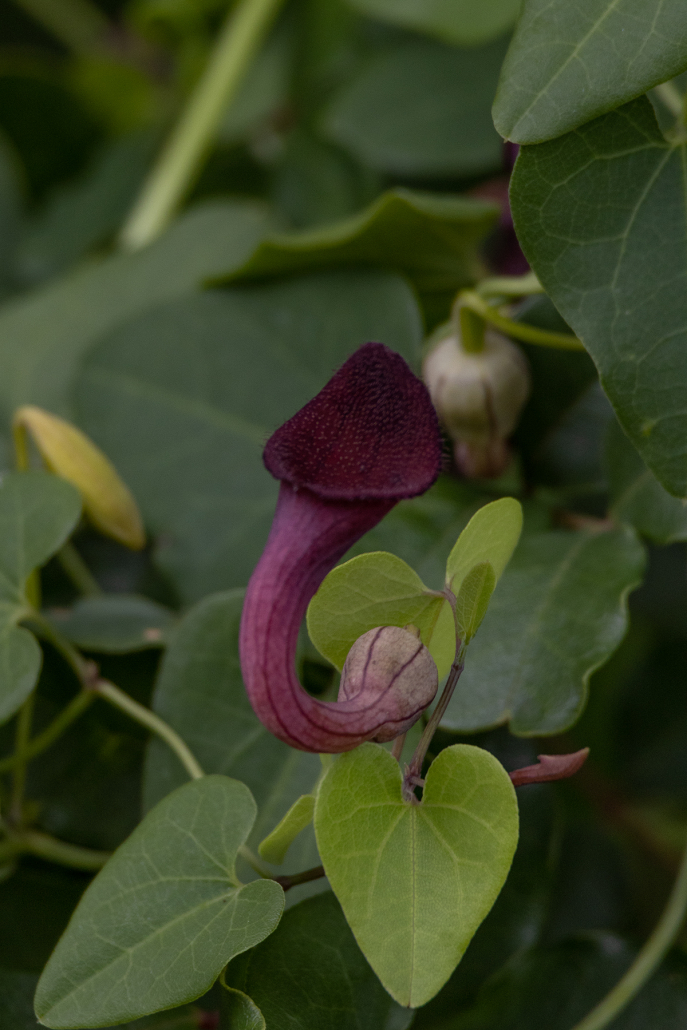
Aristolochia baetica
Having eaten, we marvelled from below at two Scilla peruviana in full bloom, high on the bank above us in a precarious position, and opted not to attempt to reach them. Instead, we took the onward path for several hundred metres to find more delights, including Tulipa sylvestris, Anemone palmata, Hyacinthoides hispanica and, at last, more Scilla peruviana beside the path at a more accessible height!
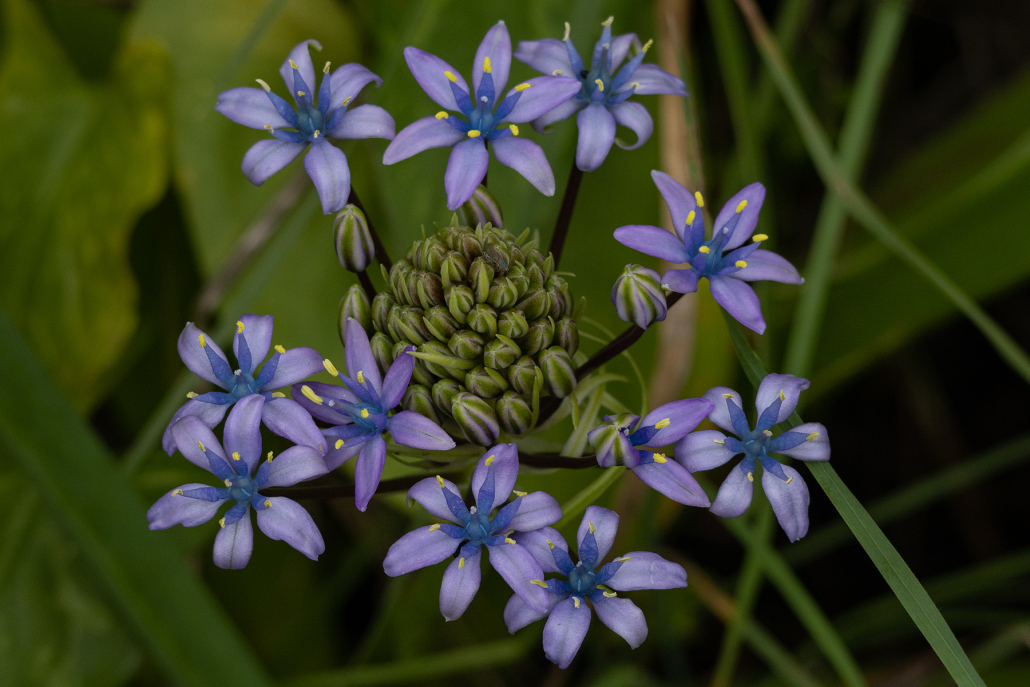
Scilla peruviana
On our way back to the vehicles we took a different path which was slightly damper in places, but were rewarded with a single Narcissus papyraceus still in flower and smelling delicious for those who got down to sniff it. In the time we had been away, the Moraea sisyrinchium had all opened too and provided a lovely sight on our return.
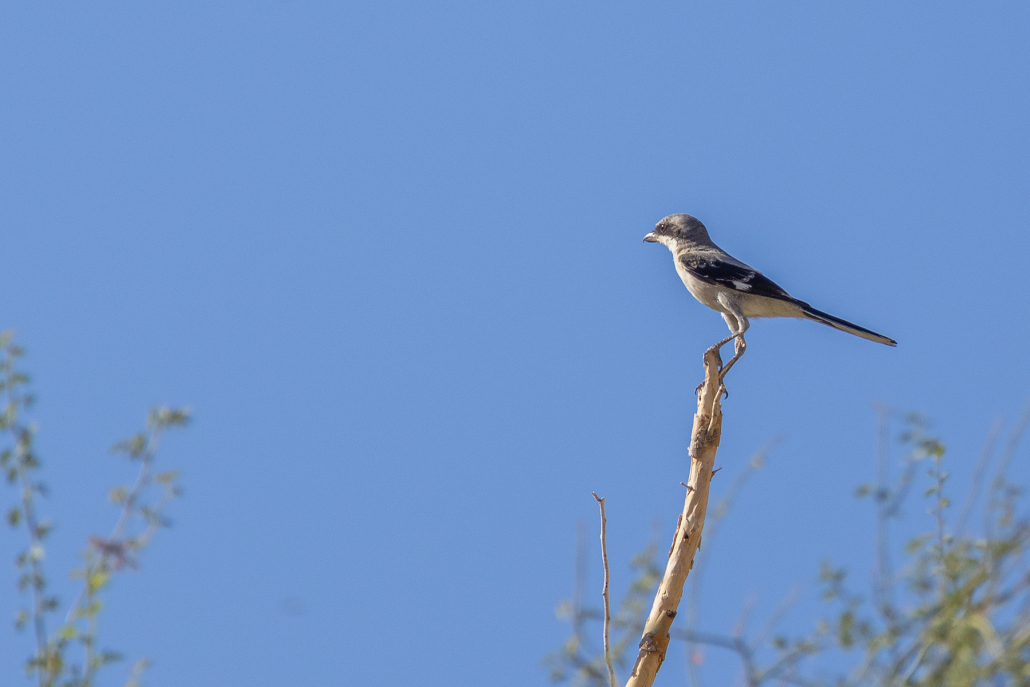
Our return to the buses was well timed just as the first shower arrived but there were a couple of extra bonuses for the birders among the group with a singing male Blue Rock Thrush on one of the pedestals of the bridge we were parked beneath, a Zitting Cisticola “zitting” from the field beyond and a beautiful male Woodchat Shrike spotted by one of the group while looking for the Cisticola.
Having enjoyed a good day, the weather was now on the turn and we headed for a coffee shop in Paderne for some refreshment and cake before making the return journey to the hotel in what had by now developed into a full-blown thunderstorm. We had timed our outing to perfection and retired a happy bunch to enjoy a relaxed evening.
Unfortunately the next morning we woke to rain and wind as forecast. With this unlikely to change, we opted to head out to some local sites rather than venture further afield so that should we need to return to the hotel, we could do so easily.
After breakfast, we drove the short distance to the start of the Rocha da Pena trail. This led us through a small village where Cymbalaria muralis was noted flowering in the wall and up a track bordered by typical matos shrubbery including several species of Cistus – C. albidus, C. monspelliensis and C. salviifolius, along with Rosmarinus officinalis, Rhamnus alaternus, Juniperus phoenicea and others. Amongst these, we found lots of evidence of Wild Boar and some interesting plants – some of which the Boar had not dug up!
The best of these were Orchis anthropophora, Ophrys scolopax, Ophrys sphegodes ssp. lusitanica, Ophrys lutea and Epipactis tremolsii. Hugo also found a spike of Limodorum abortivum although sadly, the flowers were not open yet.
On the way back to the hotel for lunch, we made a roadside stop as I had spotted what I thought were some Narcissus bulbocodium on the way. My suspicions were confirmed and the group was treated to a large patch of these beautiful Petticoat Daffodils in a brief moment of sunshine along with Anacamptis morio and a hybrid between the Man and Naked Man Orchid, Orchis x bivonae. Serin was singing nearby and the weather was seeming to pick up… until the next cloud rolled in.

Narcissus bulbocodium
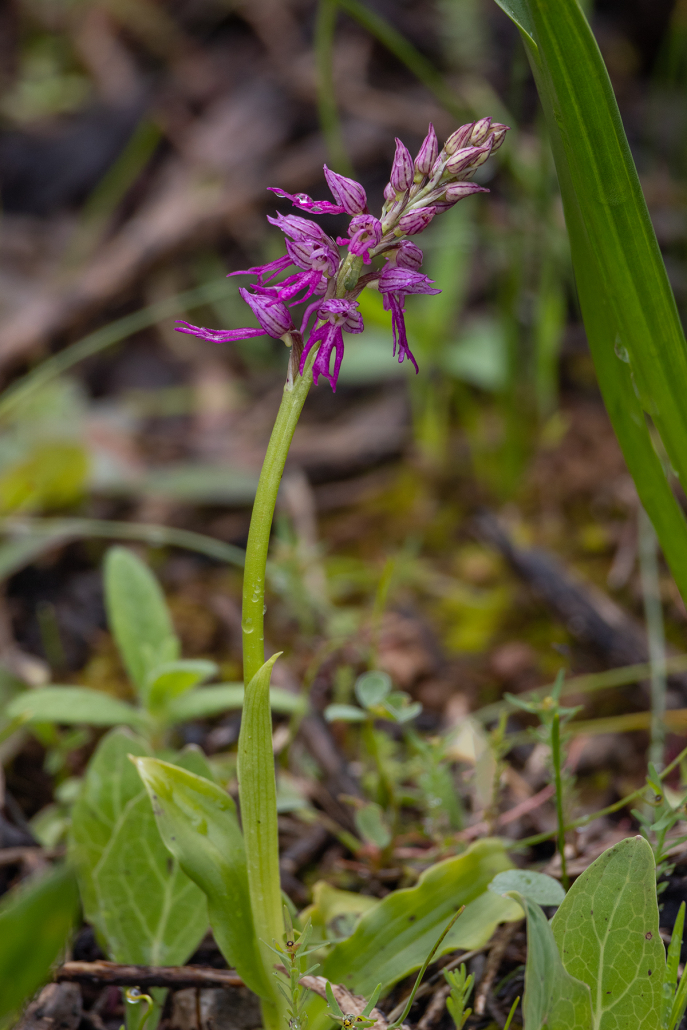
Orchis x bivonae
We headed back to the hotel for lunch and some dry clothes for some. In the afternoon, we headed out again with much more promising weather to the Fonte Benémola, spotting Crested Larks from the vehicles on the way. Once there we took another walk, this time along a more sheltered valley and in more pleasant conditions.
We had views of several species we had found the day before such as Cephalanthera longifolia, Hyacinthoides hispanica and Anemone palmata, but also added some new ones to our list, such as Coronilla juncea, Rumex intermedius and, at the end, Ophrys tenthredinifera, spotted by an eagle-eyed guest on the side of the road. There were some other great bird sightings too, including Bonelli’s Eagle, Lesser Spotted Woodpecker, and Crag Martin. Iberian Green Woodpecker and Cetti’s Warbler were among those heard calling while Serins seemed to be displaying all around us as we walked.
We took a different route back and enjoyed another delicious meal after our checklist in the evening, deciding that the day had not been as much of a washout as we had worried it might be after all.
Thankfully the next day dawned brighter and we set out after breakfast in hope that the weather would continue for the rest of the day. We made a brief stop in Alte on our way while Hugo ran an errand and the rest of the group found a local donkey called Baltazar, botanised along the verges and bird-watched in a small square for a few minutes to while away the time.
We were soon moving on and drove down towards the coast at Quinta do Lago where the sun was shining and the temperature on arrival read a balmy 16˚c in the car park. We took a few minutes for some birding right there having heard a Wryneck calling, and soon located a Black-headed Weaver and three Iberian Magpies in a tree above us too.
Having gathered what we would need for the day we set out and within feet were stopped again by our first view over the tidal lagoon. The wind here brought the temperature back down rather dramatically and we put a layer or two back on as we watched a Spoonbill feeding. There were a variety of other waders and Red-rumped Swallows zipped overhead along with House Martins as we turned to walk over the bridge towards the dunes and beach beyond. This would offer better views of the birds and some of the coastal flora.
We hadn’t got very far when some impressive and pristine spikes of Cistanche phelypaea were noticed beneath us. A number of waders were then picked up through a variety of lenses and scopes, including Dunlin and Ringed Plover, but just as we were settling in to our strides a torrential downpour caught us off guard! We hurried on to the shelter of a cafe on the far side of the bridge which provided relief, and it soon passed, proving to be the only substantial rain of the day, with only a couple of light showers thereafter.
Making certain that the weather wasn’t going to turn on us again, we headed out to the dunes and found some of the typical coastal plants of the area including Paronychia argentea, Medicago marina, Malcolmia littorea and the leaves of Calystegia soldanella and Pancratium maritimum before retracing our steps. On our way back over the bridge we had better luck with the weather and were able to enjoy the birds and plants more. We noted Turnstones, Kentish Plover, Grey Plover, Little Stint and Whimbrel among others plus spotting Aetheorhiza bulbosa in flower which we had previously missed.
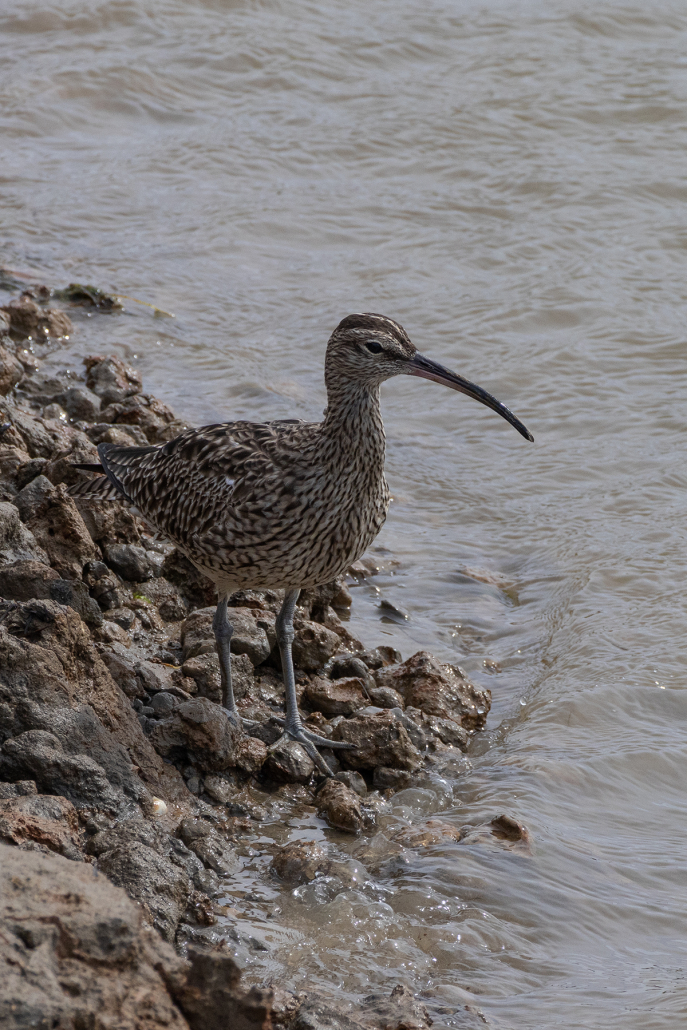
Whimbrel
Following the boardwalk along the coast we then joined a sandy path bordered by pines where Cistus ladanifer and Asparagus albus grew. A number of new plants for the trip were noted but the highlight was surely the hundreds if not thousands of Three-leaved Snowflake, Acis tricophylla.
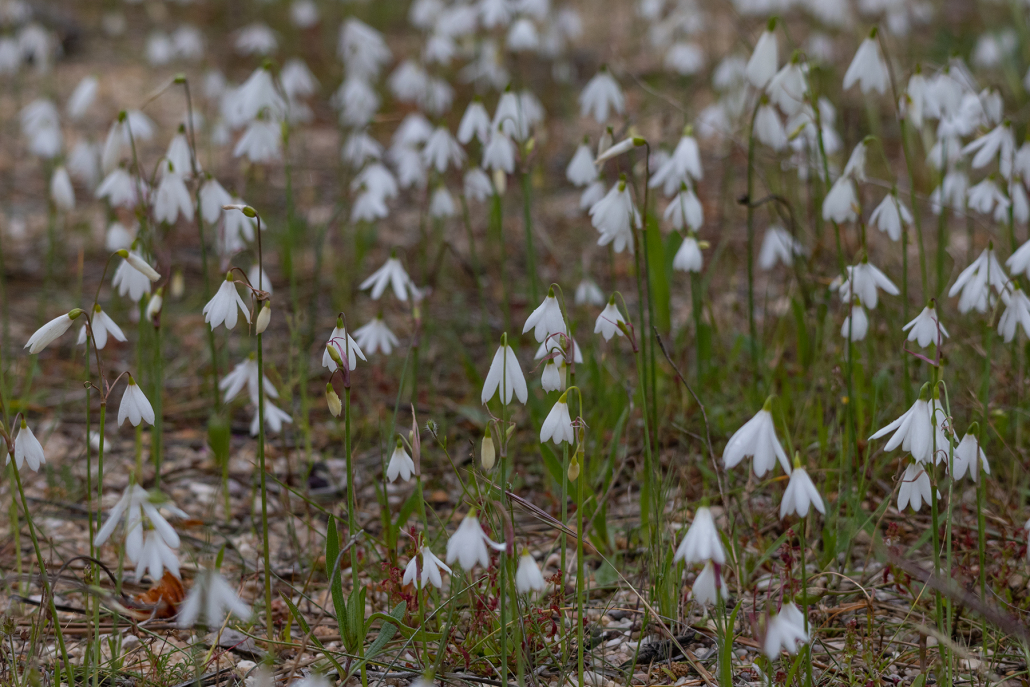
Three-leaved Snowflake, Acis tricophylla
The lagoon here seemed initially to have little of interest but we soon found Audouin’s Gull, Purple Gallinule and Little Bittern on it proving that with patience you may see more than you initially think possible.

Purple Gallinule
Walking on, we found two species of Lupin growing side by side, L. micranthus and L. luteus, and beyond this a Spanish Festoon butterfly took to the wing in the sun. A hardy party decided to push on to try to see Flamingos and were rewarded by not only the birds they sought, but also an Osprey with a fish, while the rest of the group turned for home.
On our way back to Alte we collected Hugo’s colleague, Lara, who would be joining us for 24 hours. We looked forward to getting to know her better over dinner.
The following morning was bright and sunny, and the haze from the previous days had gone so that, from breakfast, we could see the sea from our elevated position. We were in good spirits and set out northwards for a day on the plains of Alentejo near the town of Castro Verde in search of the elusive Great Bustard.
Our first stop was at a conservation centre which afforded good views over the surrounding countryside. On the way down the track to reach it, we counted numerous Corn Buntings and Stonechats, plus a few Red-legged Partridges. We picked up a pair of Lesser Kestrel on arrival and a large flock of Glossy Ibis in flight. There was masses of Erodium moschatum growing here like a carpet. We managed to identify Calandra Lark on the way back up the track to the road too.
Moving on, we visited a derelict farm where a White Stork had built a nest on the roof of a small tower that still stood. There were Collared Doves and House Sparrows round the building too and we watched a pair of Montagu’s Harriers over the hillside for some time. One of our party found a Painted Lady taking shelter from the wind in the building complex, and we noted Anthemis arvensis and Carduus tenuiflorus flowering.
Driving on, we made a brief impromptu stop for a Spanish Imperial Eagle next to the road. Our next stop was also a little unplanned since, with all the recent rainfall, a river had come over the bridge we were meant to cross. There was a small lake here though, created by a weir, and we stopped to look at the birds on it which included Great Crested Grebe, Shoveler and Spoonbill. There was also a Water Crowfoot flowering in the shallows.
Following the riverbank downstream a short way there were a few plants to note including Onobrychis humilis and Nonea versicaria, and we found some wonderful newts; Iberian Ribbed Newt and Southern Marbled Newt, beneath streamside stones that were carefully turned and replaced. One of our group also found a juvenile Iberian False Smooth Snake which posed obligingly for photos.
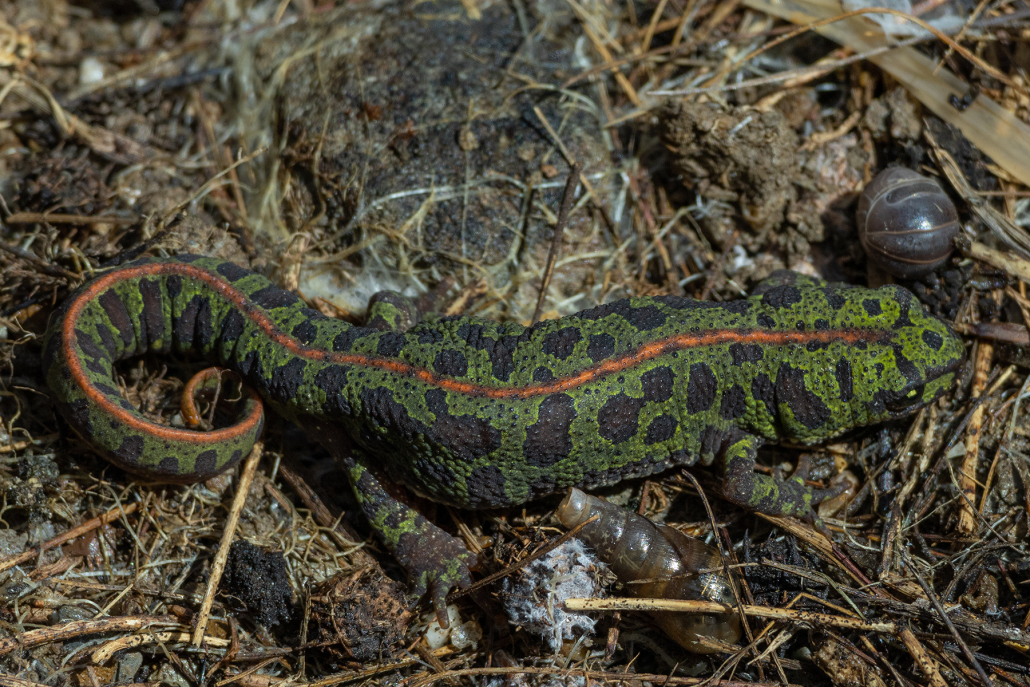
Southern Marbled Newt
From here we took the decision to head back to the village we had just passed for lunch where there were picnic tables. This proved an excellent decision because as we were eating we had fantastic views of a Booted Eagle which sailed low overhead and moments later, we found a Black Redstart.
Having eaten, we headed back to Castro Verde with the idea of getting a coffee while Hugo refuelled his van. Unfortunately the coffee shops were all closed, but we amused ourselves watching a Large White butterfly battle the wind and following a couple of chattering Iberian Magpies in the hopes of some photographs.
Continuing on without our coffee, we were at last rewarded with fleeting views of Great Bustard. One of our guests spotted the first and we turned around to try and get better views as they disappeared into a gully. Heading out onto the road from the track we were on, we were rewarded by much clearer views of a different bird on the other side of the road, and from there on we saw several more.
Although time was pushing on now, we opted for one last hurrah; finding Sandgrouse down another track just a few minutes further ahead. The effort was worth it, although the views were distant and fleeting – a flock of around a dozen flew past, looking similar to Golden Plover in breeding plumage in flight.
We headed back to Alte pleased that the weather had held out for us, with only a brief shower while we were driving back and a steady wind to contend with most of the day. There was one last delight in store for my bus, a pair of Black-winged Kites just below Alte and close to the road giving excellent views, especially when one of the group spotted that one of them had perched in a tree.
Lara had been with us all day and had proven invaluable at helping spot some of the elusive birds we had been looking for, but it was now time for her to get a train back to Lisbon. We were sad to see her go after such a short period with us, but grateful for her time.
The next day we set out in sunshine after breakfast and headed uphill to take in a different site on our way to the coast. We stopped at a roadside site first where we found a good number of Anacamptis morio and a particularly sought-after species, Dipcadi serotinum. On looking around more though, there was plenty more to note including Ophrys bombyliflorum, Ophrys speculum ssp. lusitanica, Tuberaria major and Bellardia trixago in its white and pink form. There was also another Ribbed Newt and a large centipede, Scolopendra cingulata and one of the group saw a Black-eyed Blue butterfly.

Tuberaria major
Our next stop was at the Salgados coastal lagoon where Bellis annua, Linum bienne and Cotula coronopifolia were growing in abundance among shrubby Retama monosperma. We walked round to get a better view of the birds on the lagoon where highlights included Caspian Tern, Black-winged Stilt and Avocet.
Further round, there were Iberian Marsh Frogs calling and flowers on the way to a small blind area included Anagallis monelli, Rumex bucephalophorus and Linaria resupinatum. Watching the water from here, several Marsh Harriers were seen along with Purple Heron and Glossy Ibis, the latter giving particularly good views.
Walking back we found the locally endemic Linaria algarviana, occuring only in Southern Portugal, and observed a small flock of Swallows resting briefly in a Fig tree before climbing into the vehicle and retracing our route into the nearest town to find a cafe. We enjoyed a coffee, cake or ice cream for some before heading up towards Monchique where we found a woodland edge spot to enjoy our packed lunches.

Linaria algarviana
There was some excitement when Hugo found a juvenile Fire Salamander and many of the group got good photo opportunities. There was birdsong all around us here, some familiar species like Chaffinch, others less so like Iberian Green Woodpecker and Iberian Chiffchaff which has quite a different song. Having eaten, we walked down the road a short way noting some of the plant life here. Among the highlights were Erica scoparia, Euphorbia characias, Oenanthe crocata and Scilla monophyllos.
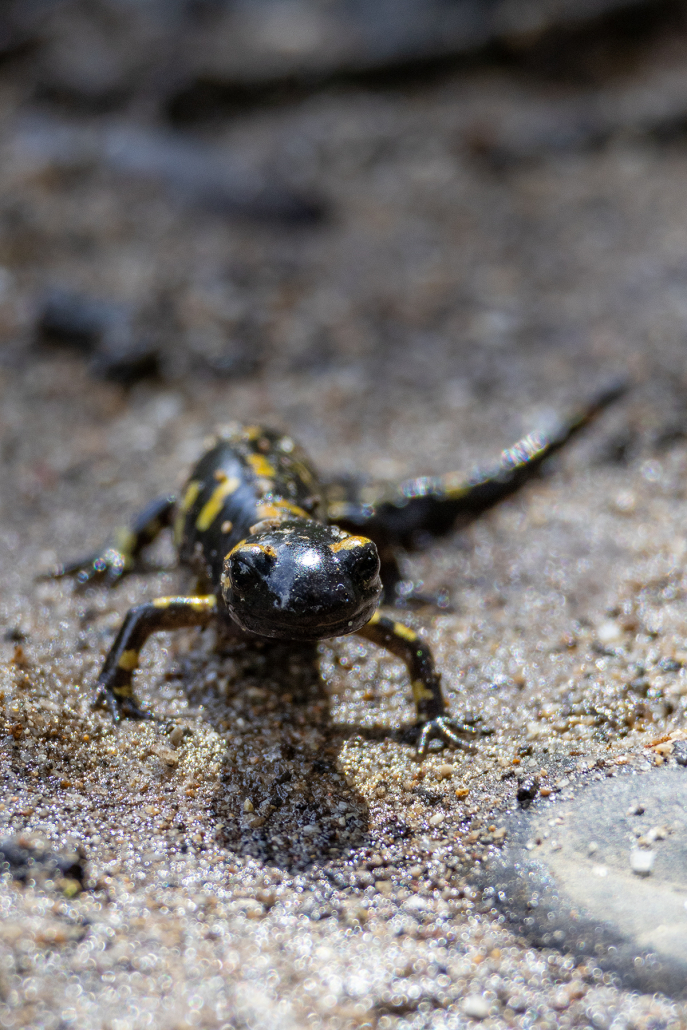
Fire Salamander
With time marching on, we continued on up the mountain to our final stop near the summit where we got out to search for Neotinea maculata and other flowers. We only found the leaves of the orchid but we did succeed in finding more of the Scilla monophyllos along with Romulea bulbocodium, as well as both Tuberaria lignosa and Paeonia broteroi in bud. Blue Rock Thrush, Rock Bunting and Linnet were all seen up here too.
It was soon time to turn for home and the return journey took us on a slightly different route which made it more interesting. We had some good views on the way and passed a field that was yellow with Lupinus luteus in flower.
Another sunny morning greeted us the next day and we headed out for our longest drive of the holiday, towards the westernmost tip of southern Portugal. Our first stop was for conveniences on the edge of Vila do Bispo, but even here there were things to spot, the most noticeable being butterflies on the wing more than one at a time for the first time all week and we added Red Admiral to our list, along with Large White for the day.
Moving on, we passed several impressive specimens of Scilla peruviana as we took a dirt track turning. We slowed a number of times to look for birds and eventually found some Thekla Larks and a Little Owl. A little further on, we stopped at a spot which looked more promising botanically and found some lovely species including Halimium calycinum, Armeria pungens and Serapias parviflora. One of the group also found Gennaria diphylla in a nice little colony and we noted a few singing birds such as Iberian Chiffchaff.
Our next stop was near the Cape of St Vincent where we found some more interesting plants. Here the locally endemic Cistus palhinhae grew in the place of the similar Cistus ladanifer that we had been seeing elsewhere. There was an attractive pink Antirrhinum majus ssp. cirrhigerum, and a locally endemic brassica, Biscutella vicentina as well as Allium subvillosum and Cerinthe gymnandra. We had lunch here and took advantage of the cafe on site for additional pastries and ice creams, enjoying them in the sun and watching the odd Red-billed Chough fly over along with White Wagtails in the car park.
From here we called in to the lighthouse on the cape itself, albeit briefly, and were treated to a few different plants including Pallenis maritima and Daucus halophilus as well as some good views of a Blue Rock Thrush and a Shag on the cliff face below.
Our final stops of the day were near the village of Budens, where we found the first of the two to be full of species we had noted earlier in the week in terms of flowers but sadly lacking in the Narcissi we sought there. Hugo did however find a large ground beetle in the genus Scarites and an Iberian Scorpion.
At the very last stop, we came across a small brick building full of Moorish Geckos and a guest also found an Iberian Three-toed Skink nearby. There was a last-hurrah in plant terms too, with a final addition to the orchid list in the form of a Pyramidal Orchid with its flower bud just about to burst. Other flowers noted here included Rosa pouzinii and Cachrys sicula.
We were treated to a wonderful sunset as we made our list in the evening and enjoyed each other’s company as a full group one final time over dinner, knowing that we would start to head our separate ways in the morning.
We were treated to full sunshine on our final morning. Two of the group had an early departure and Hugo took them to the airport while the rest of the group had breakfast. Another would be travelling to Lisbon and on north by train and so, on his return from the airport Hugo offered to drive him to Lisbon rather than take the train for the first part of the journey as well. This left the rest of the group to return to the airport together with me since they were all needing to be there around the same time, everyone being on the same flight with the exception of one whose flight was only slightly earlier.
We set out in leisurely fashion, intending to make a stop on the way for a last hurrah of wildlife on the way. We stopped at some salt pans near the airport where we were able to keep an eye on the van and our luggage while milling around looking at the coastal flora including dozens of spikes of Cistanche phelpypaea and enjoy the birdlife including a handful of Greater Flamingos for those who hadn’t made the trek at Quinta do Lago. The majority of other species were ones we had seen before but with time on our hands we were able to enjoy them to their fullest and we also added Iberian Yellow Wagtail to the list with a couple perching nicely for us atop the low vegetation.

Cistanche phelypaea
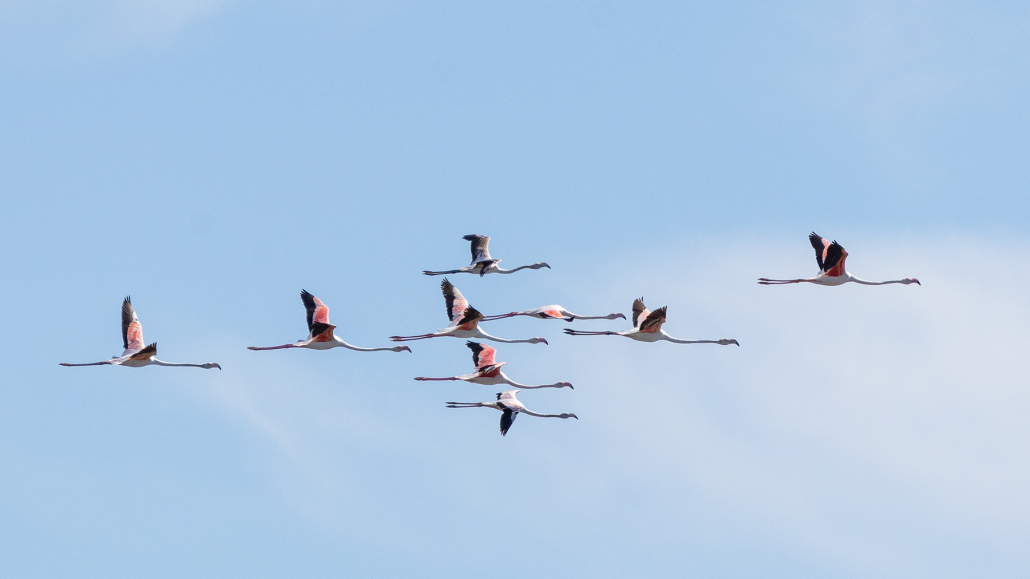
Greater Flamingos
It was soon time to head round to the airport and say our farewells. We had experienced a week of variable weather but despite this, southern Portugal had delivered all we had set out for and more. We had enjoyed some wonderful wildflowers, a great variety of birdlife and some fabulous company.