30 wild things to do before 30
In a couple of days time I will be celebrating a bit of a milestone birthday. I’m sure you can guess… Anyhow, it got me thinking. I’ve been pretty lucky so far in my life and so I thought I’d share with you 30 particularly memorable wild experiences that I’ve had. Perhaps it will inspire you to get out there and see some of them for yourself. I considered lots of different ways that I could put them into some sort of order but in the end I couldn’t decide which my absolute favourite has been and there’s quite a range so instead I’m going to start with some that are closer to home. So without any further rambling, here are my 30 wild things:
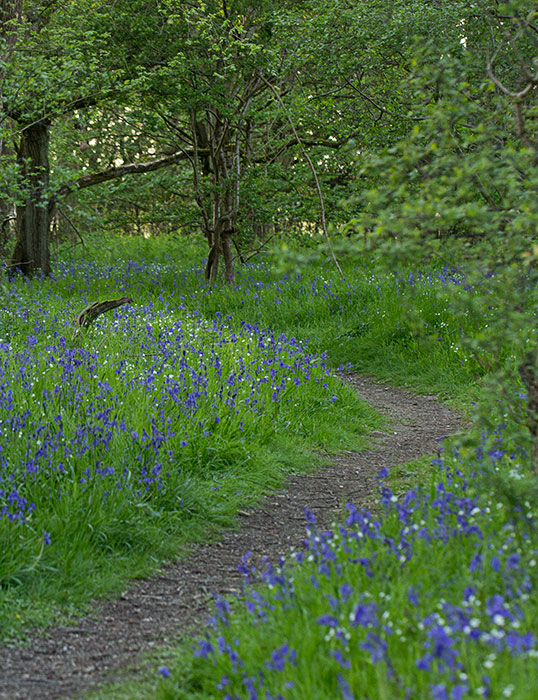
- Walk through an English bluebell wood in full bloom
There is something utterly wonderful about this spring spectacle and I happen to think we rather take it for granted. I just love the riot of colour, the hum of insects, the burst of spring birdsong and the sweet aroma that a bluebell wood brings!
2. Watch hares boxing
Hares are one of my favourite British animals. I always consider them quite majestic creatures and I count myself lucky to have a good number in the fields around my house. I was particularly pleased to see them boxing for the first time last year. To see them racing around after one another is a wonderful sight but to watch them stand on their hind legs to box is better still.
3. Observe a winter Wagtail roost
I think it’s fair to say that I got some strange looks for this one. I had been nominated as the designated driver for an evening out with some friends one December and while on the way back to the car (after midnight I should add) I was stopped in my tracks by a brilliant sight – over 200 pied wagtails huddled together in 2 small trees in the town square, shuffling from twig to twig and fluffing their feathers up against the cold. Needless to say, standing there in the chilly square gazing up at them and trying to point them out to others, I probably looked a little the worse for wear myself but it was worth it! I haven’t come across such great numbers anywhere else but they do return to the same trees each winter.
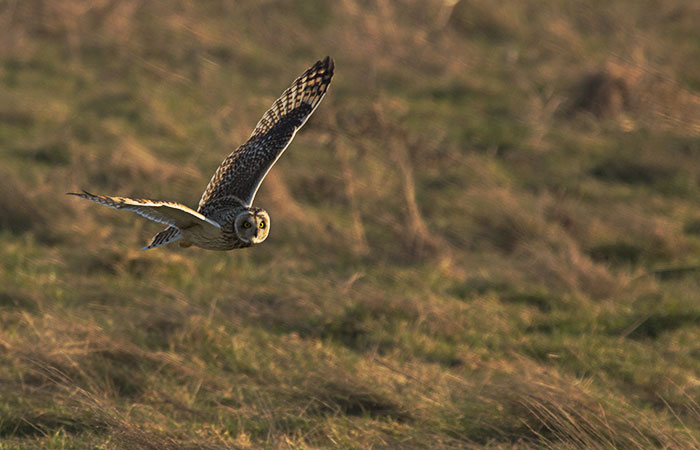
4. Surround yourself with Short Eared Owls
Owls are another favourite of mine and I love to see them. Moving to a new area, I was especially pleased to find that a number of “Shorties” are known to frequent the nearby Great Fen over winter. I visit fairly regularly now and it is still a thrill to see them hunting low over the rough grass. I think what I like best is the absolute silence, it is a true escapism from the busy world. My best day there to date involved no fewer than 7 owls, 2 kestrel, a merlin, a beautiful male hen harrier, a red kite and at the end of the day a Barn Owl to boot! There were plenty of other lovely birds there too of course but that day the raptors were out in magnificent force.
5. See a Starling murmuration
It always amazes me when I see footage of great shoals of fish darting this way and that without colliding with one another. The same is very much true of birds though we rarely see them in such dense packs. Starlings murmurating is one of only a few exceptions. The sight is incredible and the noise is extraordinary too, the swoosh of thousands of wings beating as one, twisting and turning in an almost balletic routine. It is a breath-taking view to behold.
6. Hear a Nightingale sing
I love music that emulates birdsong, like The Lark Ascending, but better still is when the song is incorporated within the piece. One of my favourite musical recordings is from 1924 and features cellist Beatrice Harrison playing in her garden and a nightingale joining in. What the nightingale thought of the whole thing we will never know, but the nightingale’s song has long been regarded as one of the most beautiful, certainly on British shores. I was thrilled to hear and even see one singing from a scrubby patch on a local nature reserve a couple of years ago and I return each year to see if I can find them again in the same place.
7. Watch a Kingfisher fishing
As a child I have a distinct memory of watching a Kingfisher feeding young on a branch overhanging a small river. I was there with my parents and we were fly fishing. I can’t tell you whether it was a male or female bird, or even whether there was more than one adult feeding the youngsters but it was an incredible sight. Since then I haven’t been so fortunate again but I have had the privilege of photographing these stunning little birds. I always listen out for a sharp “peep” and wait for a flash of blue when I walk along the river bank these days.

8. Go rock-pooling or beach-combing (preferably both!)
I have always loved the coast for as long as I can remember and I have a bit of a “thing” for seashells. Their myriad colours, shapes and patterns fascinate me along with the habits of some of the creatures that live in them. I also simply adore looking rock pools to see what I can find. Be it colourful seaweeds, see-through shrimps, scuttling hermit-crabs, skulking blennys or superb snake locks anemones, I am a happy camper if I have a pool to peer into!
9. Watch otters eating dinner
My first encounter with wild otters was in 2009. My husband and I had both recently been made redundant but had already booked a holiday to the Isle of Skye. It was one of the best trips we’ve taken and the Otters were only the beginning of it, literally. We saw a pair, probably mother and cub, on our first afternoon on the island. Amazingly my husband had spotted them in the water whilst driving and there was a handy space to pull in and enjoy the sight. They brought a large fish ashore and proceeded to crunch on it while sat on the rocks about 10 metres away. We couldn’t have hoped for a better view. We were just as fortunate 2 years ago on the Isle of Mull.
10. See over-wintering Barnacle Geese at Caerlaverock
In 2013 I was lucky enough to join my husband for a 3 day business trip to Carlisle. This might not sound ideal to everyone, it is hardly a bustling metropolis after all. However, it suited me just fine; I got to go out taking pictures to my hearts content while he worked and we met again in the evening. I wasn’t too far from Caerlaverock and so I decided to go and see what it consisted of having never visited before. Little was I expecting such a spectacle as awaited me. I was greeted by over 30,000 barnacle geese, it was almost all you could see from the tower hide. The numbers were mind boggling and their honking calls filled the air. I spent a very happy day wandering round taking it all in and I loved it!
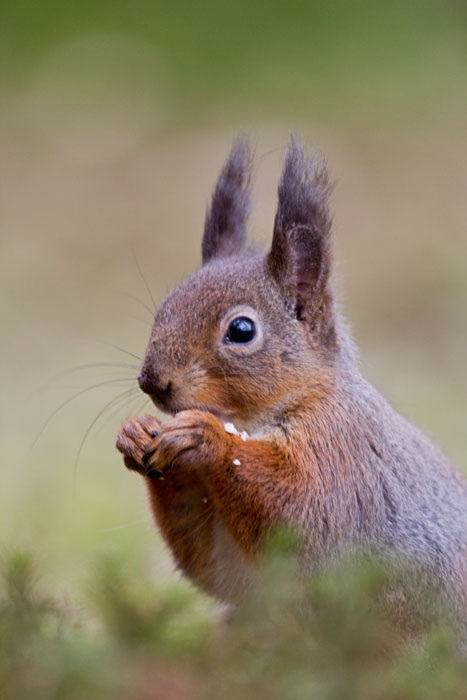
11. Get up close and personal with Red Squirrels
Red Squirrels are ever popular due to their fluffy tails and tufty ears. They are really quite characterful too. So if you get the chance to spend some time sitting quietly in a suitable woodland I highly recommend that you do so. Of course, I can’t go anywhere without my camera so I came away with a *few* shots… This particular individual decided I needed checking out before s/he was happy to frolic in the moss nearby – I was sitting on the ground with my back against a tree and legs straight out in front of me, h/she came right up and leant on my welly boot to have a good sniff – unforgettable!
12. Encounter Eagles
Scotland is a firm favourite in terms of wildlife destinations for me, and my husband is just as enthusiastic – his reasoning: there are Eagles. If you’ve ever seen an Eagle, you will know that it is a breath-taking moment. These huge birds are true wild wonders and in Scotland we have not one but two species, the Golden and Sea Eagles are both fantastic birds. There is almost always a split second of premature excitement when a Buzzard soars past but when it really is an Eagle you cannot mistake it for anything else, they are enormous!
13. Visit a Gannet Colony
You might want to take a clothes peg if you have a sensitive nose but the pungent odour is definitely worth enduring for the experience. You also need a bit of a head for heights as Gannets tend to breed on precipitous cliff faces but again, the close encounters with these elegant birds is well worth it. Sitting at the top of a gannet colony you will see squadrons returning to their nests from fishing trips, invariably a few plummeting from a great height into the sea near the foot of the cliffs and a great number of different stages of plumage if you go later in the season. There are also usually a couple of inquisitive individuals that like to get a closer look and fly only a few feet over your head – a wonderful encounter providing they keep the remains of their lunch to themselves!

14. Experience the Honey Buzzard migration
This is one of my earliest childhood memories. I was on holiday in the south of France with my parents and while we were driving along I pointed out a Buzzard to my mother. Soon I was saying “and another, and another…”, before long there were more than we could count and some barely visible with the naked eye, they were so high. I have never seen it since but I will never forget the experience of seeing so many hundreds of what I later found out were Honey Buzzards on migration.
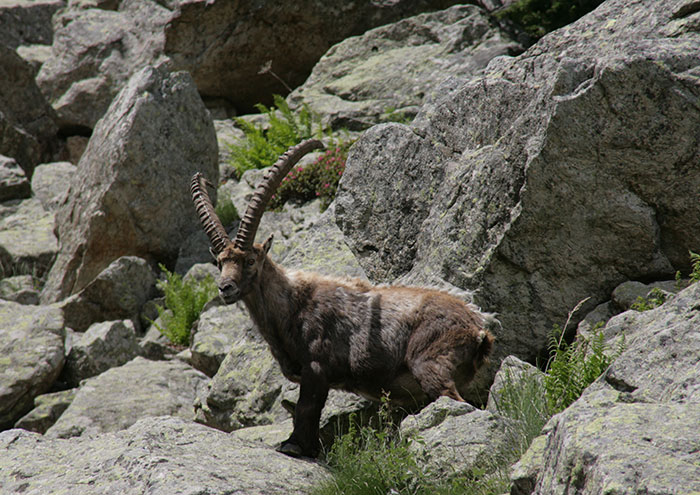
15. Encounter wild Ibex in the Alps
The Alps are another much-loved destination for me – apart from the wild flowers which are heavenly, they hold some special wildlife too. I have had many occasions watching Chamois or Marmots, but only one with wild Ibex. I was in France, again with my parents though this time quite a bit older. We had been following in my grandparents’ footsteps using notes in my Grandmother’s Apline flower book and were thoroughly enjoying exploring a new ares that we hadn’t been to before. The weather was pleasant but overnight there had been quite a heavy dump of snow higher up the mountains and they glistened white in the sunshine. We had stopped in a small car park to stretch our legs and look for alpine flowers but what drew our attention was a pair of Ibex with great curved horns browsing quietly between the boulders.
16. Walk through a carpet of wildflowers
The Alps really are a phenomenal place for wildflowers and over a number of trips I have had the great pleasure of coming across swathes of flowers on a number of occasions, be they carpets of crocuses just emerged after snow-melt or rich summer hay meadows buzzing with life. One of the most memorable though was a thick carpet of Elder Orchids in a clearing by a mountain river. The Elder Orchid comes in two colour forms; a rich dark purple and a delicate pale yellow. Here there were both colours mingled with one another and in great number. It was a patch of pure joy in flower form.
17. Pass through a blizzard of butterflies
Last summer I experienced butterflies in numbers like I have never seen before. I saw a great number of different species which was wonderful but the highlight was finding a patch beside a small mountain road in the Alps where they were congregating in enormous numbers to take in minerals. The majority here were Black Veined Whites and when we initially drove past we sent up a great blizzard of them so that it really was like being in a momentary snow-storm. They didn’t all settle down again but we stopped a short distance up the road and walked back to find there were still several hundred in this small area and all manner of other species flitting about in the sunshine too.
18. Visit a vulture feeding station
When you ask people about vultures, most have a vision of the African Savannah and hordes round a zebra carcass. It is possible to experience them a little nearer to blighty though – the Spanish Pyrenees are a stronghold for all four species of European vulture and I was lucky enough to experience it first hand. These absolutely enormous birds are fascinating to watch and not as ugly as some people might have you think!

19. Walk up the Avakas Gorge
If you read my recent post on Cyprus in Spring you will have read about a trip up the Avakas Gorge. It was a stunning place, the gorge itself is quite a sight and I personally haven’t been up a gorge where you can reach both walls anywhere else. It wasn’t just the gorge that was special though, it is also home to some extremely rare plants, one of which is not known anywhere else in the world. I can think of other places I’ve visited which have similar tales to tell but this one sticks in my mind.
20. Listen to a tree-frog choir
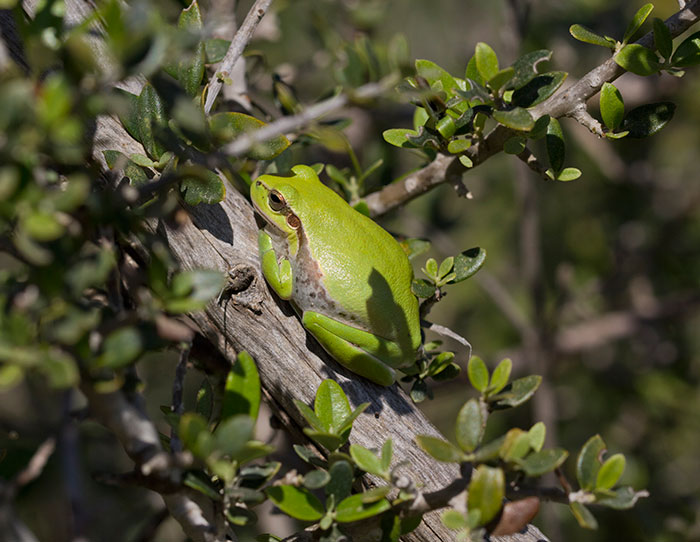
If you’ve ever been near a pond in spring you may have heard the familiar chorus of frogs and toads singing for their mates. Take a trip to Cyprus in spring (and no doubt a great many other parts of the world too) and you will find the chorus has become a veritable din. I have never heard such loud frogs as the Middle Eastern Tree Frogs which were singing their hearts out outside my hotel window there! The sound was incredible yet we had a great deal of difficulty in tracking down the songsters. We eventually found one and were surprised at how small they were considering the noise but got a lovely view of an individual the following morning.
21. Go to the Grand Canyon
This is one that I deliberated over including but the scale of this staggering geological feature alone is worth a visit. I hasten to add at this point that I have yet to venture into the canyon itself though I would dearly love to. The view from the lip is spectacular and if you’re brave enough to walk on glass a mile up then the “sky bridge” is surely worth a visit. One other thing sticks in my mind from my visit – we were in the Arizona desert at the top and there were green trees along the river’s edge in the bottom yet there was a dragonfly on a cactus next to me!
22. Delight in hummingbirds
I think there must be very few people who can say they wouldn’t like to see a hummingbird. I encountered my first in Peru whilst on an acclimatisation trek into the Andes but have since seen them in California too. Every encounter has been exciting for me, I love the tenacity of these tiny birds and their colouring is quite simply astonishing. This image is from a particularly close encounter which I will never forget.
23. Yodel in Yosemite
Well ok, you don’t have to yodel, but you should definitely marvel at the extraordinary rock formations, enormous waterfalls and breathtakingly beautiful scenery. There is so much to see and do in Yosemite, despite what people may tell you, wildlife abounds here if you stay quiet and wait patiently. Just watch out for Bears, Bob-cats and anything else that might want to eat you!
24. Visit an Elephant Seal rookery
I enjoy seeing seals here in Britain but Elephant Seals are another fascinating animal to watch. We got the opportunity to visit a rookery in California last year and despite the rather fishy aroma (which seems to be a common theme…?!) it was a great experience. At the time we visited they were moulting and so mostly sleeping although a few young bulls were jostling with one another in the shallows. Their grunts, bellows and snores are amazing to hear and despite being less cuddly than some of their coastal neighbours (see below) they make for some nice photos occasionally too.

25. Watch Sea Otters
I know I’ve already had otters on here further up but for me these little fluff-balls had to be included too, not only because they are adorable but because their behaviour is so interesting to observe and because they were once much fewer and farther between. I wasn’t sure whether they would be a species we would see when we went to California but they were much more numerous and noticeable than I had anticipated so I was really excited to see them daily while we were on the coast.
26. Hike to a glacier
I was lucky enough to do this in New Zealand where I visited the Fox Glacier. It was an incredible sight close up, the layers in the ice are more clearly visible and you can hear occasional cracks, creaks and groans as the whole thing moves. You could choose a Scandinavian country like Iceland where you could rent a camper van (similar to https://www.rent.is/blog/4×4-camper-van-rental/) and then hike to a glacier. It would be an experience of a lifetime.
27. Surround yourself with a super-pod of dolphins
Again in New Zealand, I was fortunate to experience this extraordinary phenomenon. We were actually on a whale watching tour (see below) and our guide explained that for every dolphin on the surface at any one time there were around 5 beneath the water, and that there were usually upwards of 100 at the surface at once. It was truly awesome and I hardly knew where to look, there were just so many of them!
28. Go whale watching
This is an absolute must for me. I went in Kaikoura on New Zealand’s south island and it was fantastic. I would jump at the chance to go again just about anywhere there’s an opportunity. We saw several large Sperm Whales, some surfacing, some hanging out near the surface for a short while and a few deep diving with that familiar tail fluke looming out of the water.
29. Search for emerging cicadas
Cicadas are cyclical creatures, they spend very little time as a winged adult but can live for 3-17 years (depending on species) beneath the ground as a larva. Seeing these emerge is therefore all the more spectacular when you know they’ve been building up to it for quite a while! Having crawled out of their cavity in the ground, most make their way up a sturdy plant or tree trunk where they shed their larval skin and take on a new winged form. They will then put on a noisy show of calling in chirps similar to a cricket in order to attract a mate. I saw this in New Zealand too, the empty cases of the larva were up every tree trunk in town!
30. Climb the Andes
Now I’m not saying you have to climb the highest peak, but get out there – it is a wonderful mountain range! It is hard work if you go as high as I did – nearly 15,000 feet above sea level – but it is definitely worth the effort. I only had a little film camera in those days and lost a whole reel’s worth of photos from the highest part of my trek sadly but I took this in the Sacred Valley and scanned it so you can see just how beautiful it is.

So I think those are probably my top 30 wild things, but before I sign off I want to briefly touch on a few that are on my wish list that I haven’t yet managed:
Puffins – my personal bogey bird, perhaps this year?
Basking sharks – I’d love to see one of these magnificent beasts in british waters.
Wild Elephants – what a sight they must be!
Rainforest – an ecosystem that I would love to visit at least once.
Alaska – stunning mountains, lakes, northern lights, wildlife…. enough said.
Great barrier reef – it has to be done!
…..A girl can dream, right?
SaveSave


