Tag Archive for: Spring

Beautiful British butterflies

Recently, I read a wonderful book called The Butterfly Isles by Patrick Barkham (I would highly recommend it if you haven’t already come across it!). The author describes his personal challenge to see every British species of butterfly in one year and I found it gripping reading. There is something intrinsically joyful about seeing the first beautiful British butterflies of the new year on the wing and Patrick captures that wonderfully in his writing. The book also inspired me on a personal level; that is not to say that I intend to try and follow in his footsteps, but it did make me realise that there are quite a few species which I haven’t seen before, be it in Britain or at all. Had this book reached the hands of reputed graphic novel illustrators, I’m sure they might have been able to create wonderful magic with this particular story.

The first to emerge are those who have braved the winter elements and survived their hibernation. Among them Small Tortoiseshell, Comma and Peacock as well as the original butter-coloured-fly, the Brimstone. Having endured the autumn and winter they have a tendency to look a little ragged around the edges but despite seeming so fragile it is staggering that they appear quite able to continue relatively unhindered.


Comma


Brimstone

Next to arrive on the scene are the first new butterflies which have over-wintered as caterpillars or pupae. Unlike their tattered counterparts, they are fresh and almost sparkling in their newness. One of my favourites is the Orange Tip. I’m not certain that I could sum up why in words, I just love them. Strangely though, despite having been a familiar sight for me since my childhood days I still have yet to photograph a male. The females are just as beautiful but are, I think, a little easier to photograph as they seem to sit still longer than the males.


Female-Orange-Tip


The next butterfly I thought I should be looking out for was the Holly Blue, a species that I had never managed to find before. To be honest I wasn’t even sure where to look, but there were a few reports on social media appearing so I knew that the time was right. Then one afternoon while sitting in the sunshine with my husband in our garden he pointed out a small blue butterfly flitting around above our heads. Needless to say I nearly fell out of my chair in my effort to get my camera, but the photo was not to be as it had disappeared by the time I came back outside. Since that day around a fortnight ago there have been several more in the garden and they have been taunting me but I still haven’t got the image I want. I will have to persevere!

The following day though I visited a local nature reserve briefly and was astonished to find a group of people clustered in one area (I’d never been there at the same time as anyone else before let alone a group!). On further investigation they were butterfly hunting and with some success. They had found another butterfly that I had never seen before in the UK, the Grizzled Skipper. I didn’t even realise that it was a suitable spot for them but I will definitely remember in future! It was much smaller than I had remembered but I managed a couple of photos and met some great people too.


Grizzled-Skipper


So, as far as this year goes with butterflies I am off to a good start and what’s even better is that I’ve not travelled further than 5 miles from home! I am looking forward to the rest of the summer and all the other exciting species to come.

SaveSave
Give Nature a Home

There is a laudable trend currently to “Give Nature a Home“. I believe the phrase was coined by the RSPB in a campaign to get everyone involved in wildlife conservation and the idea is certainly a good one. It got me thinking and I have several anecdotes which I’d like to share with you about giving nature my home.

This morning I released yet another Ladybird into the garden from the confines of our dining room. As I write, there are 3 more wandering around on the ceiling in there… they will have to wait!

Growing up in the countryside and continuing to do so as an adult, nature has always played a central role in my life and not always outside the house. Not only did we have similar influxes of ladybirds in my childhood home, but they would often be joined by butterflies, lacewings and all sorts of other critters too. They weren’t invited as such, unlike the frogspawn in a glass tank on the kitchen table in spring, but we didn’t turf them out until the weather warmed again.

Summers were no different, solitary bees would try to build mud nest chambers on the posts of my parents’ four-poster bed when the window was left open during the day, and swallows would use the curtain pole as a perch. I was forever rescuing butterflies and bumblebees from the conservatory too.

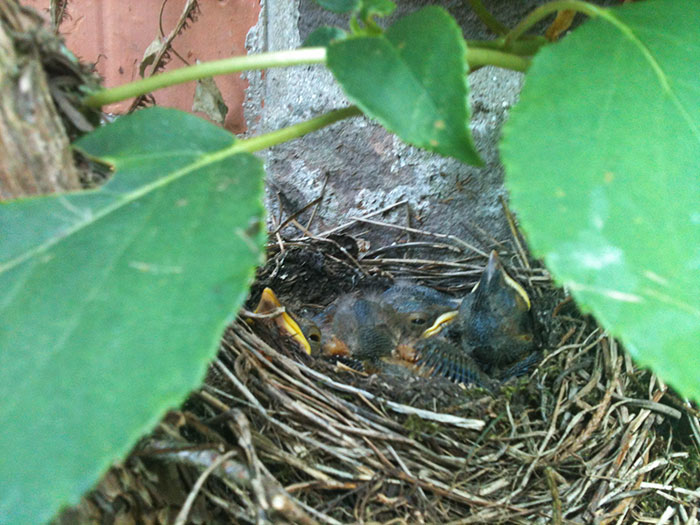
My parents didn’t seem to mind too much and in other aspects were keen to encourage wildlife to use our house, putting up concrete House Martin nests, a Swift Box and a variety of other bird boxes and feeders. The House Martins took to it well, though I think it was used by Sparrows last year, the Martins choosing to build their own mud construction. The next boxes have been used by Spotted Flycatcher, Robin, Wren and all sorts of others. There was a Blackbird nesting in the creeper one year and Goldfinches in the climbing rose outside the bathroom window.

Blackbird-nest

Night time was no different either; moths would flutter in, attracted by the light, and continue to bash themselves off the lampshade in characteristic fashion. I was particularly stunned by an Elephant Hawkmoth in the kitchen one summer. Meanwhile a pipistrelle bat developed a habit for flying in through the open bedroom window and completing a circuit of the house, before coming to rest on the spare bathroom lampshade. There has been a bat colony in the roof as long as I can remember but this one clearly decided it would like to be in more comfortable surroundings!

Though it’s fascinating to see such things, I’m aware that when there are a lot of them, they can spread diseases or parasites. Because many of their natural roosting sites have been lost, it is becoming more common to find bats roosting in human structures. So, if you find a large number of bats in your home, you might want to contact a trained bat removal specialist who can inspect the situation and locate the points where bats are getting into your home and get rid of them as soon as possible. Though while doing that, my heart would definitely cry, I don’t think I can ever jeopardize anyone’s health because of my passion!

Anyway, in the house itself there are ample spaces for wildlife in the garden and farm buildings too. I will never forget helping my parents to clear out the hay barn one summer and coming across a nest of Hedgehogs, the babies still pink and soft spined. We carefully placed old bales around it to protect them from predators and left them while we had lunch. On returning we found that the mother had moved them all (probably quite sensibly) so we continued with our work. It was one of the last times we saw Hedgehogs in the area for nearly twenty years, but I’m pleased to report that they are back as discovered by the Labrador who barks at them when she comes across them on the lawn in the evening!

There are 2 ponds in the garden as well as a natural stream and I always enjoyed pond-dipping in them as a child. There are also plenty of areas left un-mown which encourages lovely wildflowers including Self Heal, Common Spotted Orchids, Lady’s Smock and Knapweed, all beloved by bees and butterflies. On Easter Sunday this year you may have also seen that I tweeted about an Easter Bunny, a leveret to be precise, and the first Hare I’ve seen there for a while which was lovely. I want to decorate my garden area even more after seeing all of the natural beauty and visitors. I’m thinking about putting in some Landscaping Rocks near the pond to make a pathway or just to add a decorative border to it. The landscaping rocks may give the appearance of a larger, more luxurious yard or a more intricate and beautiful patio. They can provide a sense of calm or excitement as well.

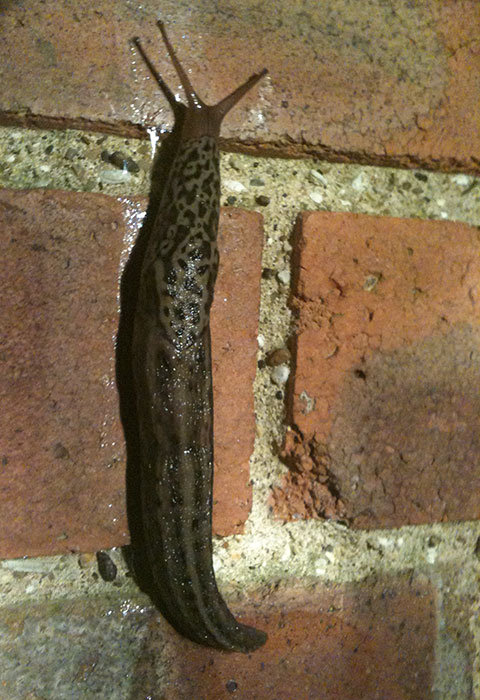
Over the years I’ve had some interesting visitors to my own house too: Leopard Slugs, Mason Bees, Privet Hawkmoth, Violet Ground Beetle, various Shieldbugs and a Wood Mouse on the outer living room windowsill to name a few. I also once found a Sea Slater on a friend’s living room carpet – they do live on the coast but that was rather a surprise nevertheless!

Leopard-Slug

I have yet to finish all the touches in my own garden to encourage wildlife, but having already added plenty of bird feeders and nest boxes I am currently watching some chubby looking Blackbird fledglings hopping around on the lawn. We regularly get Muntjac in the garden too and I’ve marked out where the pond is going. Progress may be a little slow but it is underway and so far so good. I am always on the lookout for ideas to encourage wildlife so do get in touch if you have any you’d like to share. In the meantime, I will continue to share my own home with the Ladybirds!

SaveSave