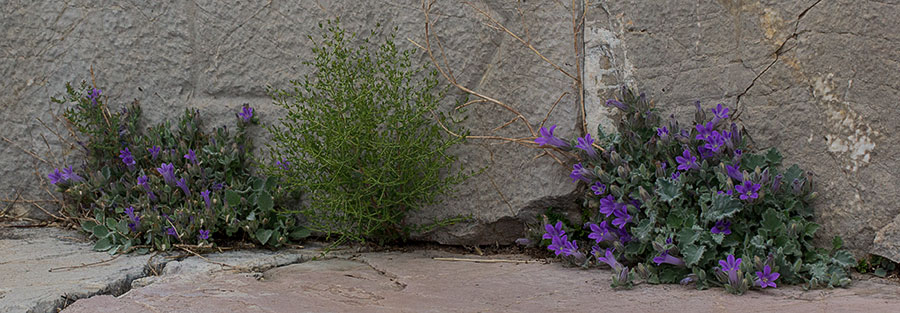
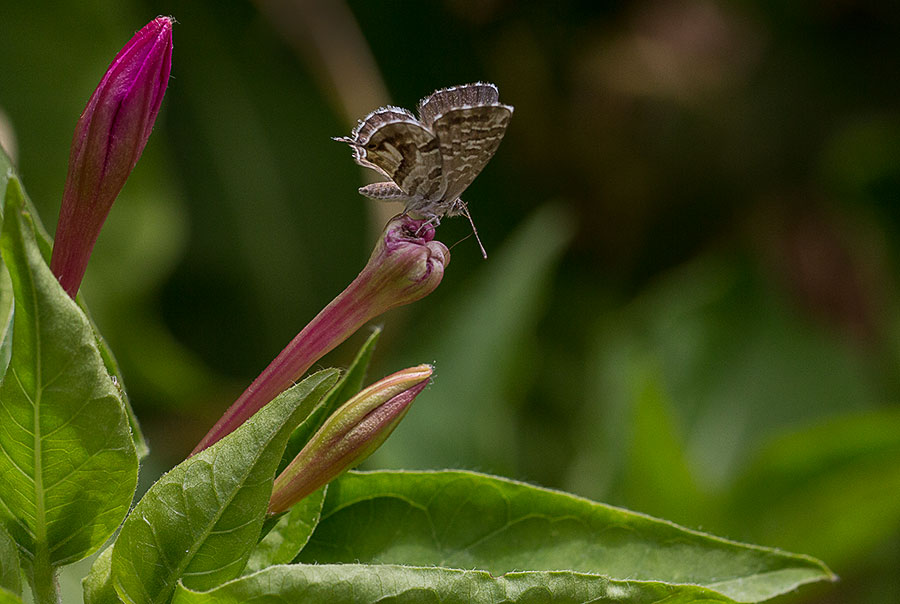
More Grecian Butterflies
Following on from my last post detailing a tour round the Gulf of Corinth for Greenwings Wildlife Holidays to look for Grecian butterflies, I’m picking up where I left off. Join Julian Dowding, esteemed illustrator Richard Lewington and me as we set out for several more days exploring the Greek countryside in search of its rich and diverse lepidoptera – of course everything else we find is a bonus and not to be overlooked either!
Our fourth day broke and we woke to a rather miserable morning weather-wise, but were not too disheartened as we were transferring to our second base for the week and so hoped that we may be able to find a sunny spot on our way. We packed up the vans after breakfast and set out, making a brief fuel stop en route. Unfortunately the rain didn’t relent and so we stopped for a coffee in a small cafe on the harbour front in the charming little town of Galaxidi. As we finished our drinks the sun came out and we were able to have an impromptu wander around the harbour and up the wooded hill on the far side to a little historic cave dwelling.
Much of the ground vegetation had been cleared here, presumably to prevent fire risk being so close to the town, but we still managed to find a few things of interest. The first was a reasonable sized Marginated Tortoise, looking for all the world like an old tin army helmet with legs, and which seemed rather surprised to be suddenly confronted with people! One of our guests then spotted a Freyer’s Grayling on a tree trunk and as the sun’s warmth continued to pervade we saw many more, most of us sporting them as fetching accessories at one point or another during our time here. There were also a couple of Small Whites and Wall Browns fluttering around.
Some large Lobed Orb-Weaver Spiders, Argiope lobata, caught people’s attention among the spines of a Prickly Pear and several Rosemary Leaf Beetles shone beautifully in the sunshine among the twigs of the Rosemary bushes beside the path, showing off their metallic red and green stripes.
Back in the harbour, we had nice views of Yellow-legged Gulls, and lots of House Martins and Collared Doves. There was plenty to look at in the water too, with crabs feeding on the surface where a patch of seagrass held them above the water and lots of small fish, sea anemones and sea urchins just beyond the harbour wall.
It was soon lunchtime and we found a delightful restaurant on the waterfront which offered us a selection of delicious local dishes to enjoy before we hit the road again. Our journey took us along the coast road to Antirrio. Unfortunately the rain set in again while we were on the road and the views of the other side of the Gulf of Corinth were masked by low cloud, but the sea still looked amazingly blue-green despite the poor weather. We crossed the spectacular Rio-Antirrio suspension bridge over the Gulf and turned back towards Athens taking a turn off the new motorway at Diakopto. By now, the sun had begun to shine again and we were soon making an impromptu stop to make the most of it.
We had not long turned onto the road towards Kalavryta when we saw a suitable spot to stop beside a river where some orchards came down to the road. Here we found Holly Blue, Speckled Wood and Southern White Admiral butterflies as well as Beautiful Demoiselle and Whilte-legged Damselflies.

White-legged Damselfly
There were some impressively large Weevils as well and once again one of our guests spotted a Short-Toed Eagle take off from a nearby tree and soar overhead.

Lixus angustatus weevils mating
Our legs suitably stretched we decided to move on up the mountain to another good butterfly spot while the weather allowed. Our next stop was a small meadow surrounded by woodland with a small spring running through it to the river below. As we pulled in a large butterfly soared effortlessly over the vans at high speed and quite a height. Julian leapt from the vehicle with a shout of “Cambi” but the Camberwell Beauty was almost out of sight. It made a few brief appearances at great height overhead but didn’t come so close again. Nonetheless, we soon had plenty more to look at including Brown Argus, Common and Chapman’s Blues, Small Skipper and Balkan Marbled White.

Brown Argus
An eagle-eyed guest found a beautiful brown form female Meleager’s Blue and there were still more lovely butterflies to be found here including Lattice Brown, Wood White, Hungarian Skipper, Painted Lady, Ilex Hairstreak, Grecian Copper, Large Wall and Freyer’s Grayling.

Brown form female Meleager’s Blue
Another member of our group found a lovely Silver Washed Fritillary while a third came across a Greek Stream Frog. I also found a rather nice Longhorn beetle on the back of a Bramble leaf.

Longhorn beetle, Corymbia cordigera
We also found a pair of beautifully coloured Jewel Beetles living up to their name.

Jewel Beetles
An intriguing plant also caught my eye here, a very slender, yellowish Bupleurum.

Bupleurum glumaceum
The rain eventually caught up with us as we climbed back into the vehicles for the last leg of the trip which was punctuated only by a brief stop at a roadside kiosk to buy locally grown cherries which were passed around the buses to share. We arrived in Kalavryta in the early evening and had time to settle in before taking a walk round the town and heading to dinner in a Pizzeria near the town square.
Another morning of unseasonably wet weather greeted us the following day and we decided to head back towards the coast in the hope of getting out of it. We took a circuitous route via a small village called Plataniotissa where a huge and ancient hollow Plane tree has become the local church and which you can read more about in my piece about an Autumn trip to the area. There was little wildlife to see in the downpour but the magnificent church in a tree was worth a detour.
Reaching the coast, we visited the bottom of the Vouriakou Gorge and set up a bait of over-ripe bananas mixed with ouzo in the hopes of attracting Two-Tailed Pashas. The rain didn’t let up though and while we saw a few Beautiful Demoiselles and one of our group spotted a freshwater crab, we soon headed into Diakopto in search of a coffee shop to warm up and wait out the worst of the storm.
Suitably refreshed, a few members of the group decided that they would like to take the rack and pinion train back up the gorge to Kalavryta. Having checked the timetable, we gave them their packed lunches and sent them on their way, promising to wave as they passed us, as we were heading back to the gorge. Our second stop here was more successful as the rain abated for a while as we ate our lunches, supplemented with some lovely local sunflower seed breadsticks from a bakery in town. A couple of Lattice Browns were spotted flying around the treetops and a wander yielded Eastern Bath White and Southern Small White. It was a start!
The Beautiful Demoiselles were still there in some numbers and a couple of White-legged Damselflies were found too while a Common Kestrel’s calls echoed through the valley from above us.

Beautiful Demoiselle
Probably the most intriguing find was the utterly enormous green caterpillar of the Giant Peacock Moth, Europe’s largest moth. It was easily 4-5 inches long and feeding happily in a Blackthorn bush. We all got good photos and were able to admire the bright blue spots from which sprouted coarse looking black hairs. In the damp weather, several of these held water droplets.
Heading back up the mountain we stopped once more at the spring in the woods that we had visited the day before. The rain had stopped and although the sun wasn’t quite out there were butterflies about as well as a Cetti’s Warbler loudly declaring its presence from the trees nearby.
In terms of butterflies there seemed to be a vast number of Brown Argus in particular and most posing calmly for photographs so I took rather a lot. I’m not going to post them all but here are a select few!


Brown Argus
At one point, I saw a frog jump into the undergrowth and was looking for it when I became a model of a new species for the trip, a Woodland Grayling which had landed on my arm and sat nicely for the rest of the group to photograph there. It then sat on the numberplate of one of the vans for a moment or two which allowed me to photograph it too.

Woodland Grayling
A Silver Washed Fritillary was found in the higher section of meadow along with a Long-tailed Blue, while Brown Argus, Holly Blue and Wood White were seen lower down. There was soon a call from the roadside that a new species had been found in a clearing a few yards further on and so we carefully walked down the road to find it. On the way we found a lovely male Meleager’s Blue on a mint plant in the ditch and a green shield bug nymph doing its best to blend in.

Male Meleager’s Blue

Shieldbug nymph
In the clearing beyond, we were greeted by a lovely Grecian Anomalous Blue which was perched atop a plant and quite happy to be photographed by one and all.

Grecian Anomalous Blue
Moving on uphill it was decided that as we still had time to spare we would head on beyond Kalavryta to see if the sun was shining higher up. We passed those that had taken the train on the way as they were returning from the Monument of Remembrance marking the terrible massacre that occurred in the town during the Second World War.
We found a sunny spot just off the road and pulled in to explore some local meadows. A nightingale sang here and just outside the buses a patch of mint was covered in Common and Chapman’s Blues and Brown Argus. The other side of the track a Great Banded Grayling basked on a rock and a Lattice Brown rested on a Mullein leaf allowing good views of its lovely eye-spot patterning.
Acanthus spinosus was in good flower here as were a number of slender Larkspur stems. Small Skipper, Meadow Brown and Clouded Yellow fluttered around the flowers in the meadow and a lone Hermit was found soaking up the sun on a small stone at the top of a steep bank. Other butterflies found in the meadow were Balkan Marbled White as well as Small Heath and both Anomalous and Ripart’s Anomalous Blues.
Suitably content that we had found butterflies despite the soggy start to the day we made our way back down the mountain. That evening we enjoyed a lovely dinner at a traditional restaurant around the corner from our comfortable hotel.
With the weather looking as though it might be clearer the next day, we set off after breakfast up the mountain once more and headed for the Chelmos ski centre. We were in the cloud on arrival but made the decision to venture out for a few minutes to see whether any butterflies could be found settled in the long grass. The temperature was a decidedly chilly 8°C which was a surprise to most of the group who had packed for more usual warm conditions.
Despite our searching there were no invertebrates to be seen and the only species noted were Linnets in the car park. We drove the short distance to look into the Valley of the Styx and see whether we might have more luck there, but as we couldn’t even see into the valley for the cloud we turned back the other way and took the road towards the Cave of the Lakes. The weather was not improving so we dropped down into the small town of Kleitoria for a coffee stop.
It wasn’t long before the sun broke through the clouds and, suitably refuelled from our refreshment break, we set out uphill once more. We had barely left the small town when we made our first stop beside the road at a scrubby meadow where the beautiful Grecian butterflies we were looking for were making the most of the warming sun.
Immediately beside the buses was a patch of brambles which bore both Small White and Southern Small White plus a couple of slightly battered Common Blues. There was fennel growing in the verge too and closer inspection of the plants yielded several Swallowtail caterpillars at different stages of development. One of our guests also came across a Sage Skipper nectaring on the flower of a Spanish Oysterplant.

Swallowtail caterpillar
Along with the Swallowtail caterpillars in the verge, I also came across another caterpillar which at the time was somewhat of a mystery in terms of identifying what it was and would turn into. Thankfully, my lovely Twitter followers have helped me to establish that it is a moth called Manuela palliatella.

Manuela palliatella
The other side of the road I came across several instars of Hairy Shield Bug nymphs. I was intrigued to see that they become progressively less hairy as they age but they certainly show how they earned their common name!


Hairy Shield Bug nymph
Climbing the bank there were plenty more butterflies to be found including Great Banded Grayling, Brown Argus, Small Copper, Wall Brown and Southern White Admiral. A Large White fluttered past along with an Eastern Bath White and several Clouded Yellows followed suit. Overhead a Kestrel was making rather a commotion and looking up, we found it to be mobbing a juvenile Golden Eagle directly above us.
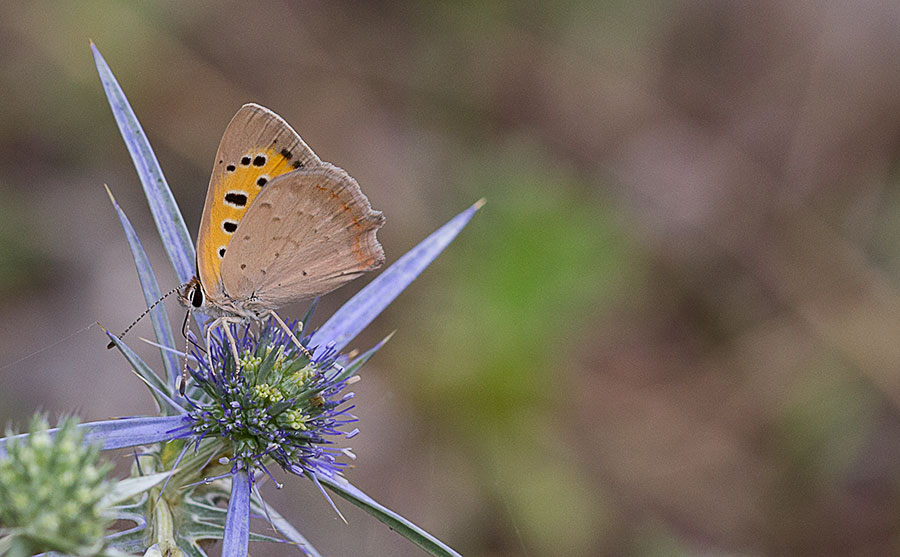
Small Copper
One of our guests found a Weasel hunting around a stone pile in one corner of the meadow and popping up, “whack-a-mole” style every few moments to keep an eye on him. Further up the bank, an Anomalous Blue was found along with Spotted Fritillary, a slightly worn Grecian Copper and several Long-Tailed Blues.

Long Tailed Blue on Felty Germander
A gorgeous Scarce Swallowtail also flew through, pausing to feed on a lovely blue Eryngo and allowing most of the group a good look albeit from a reasonable distance. In a meadow below the road at least two more were spotted egg-laying on Blackthorn bushes. Along with the butterflies we found a Red Assassin Bug wandering about, presumably in search of its next invertebrate victim.
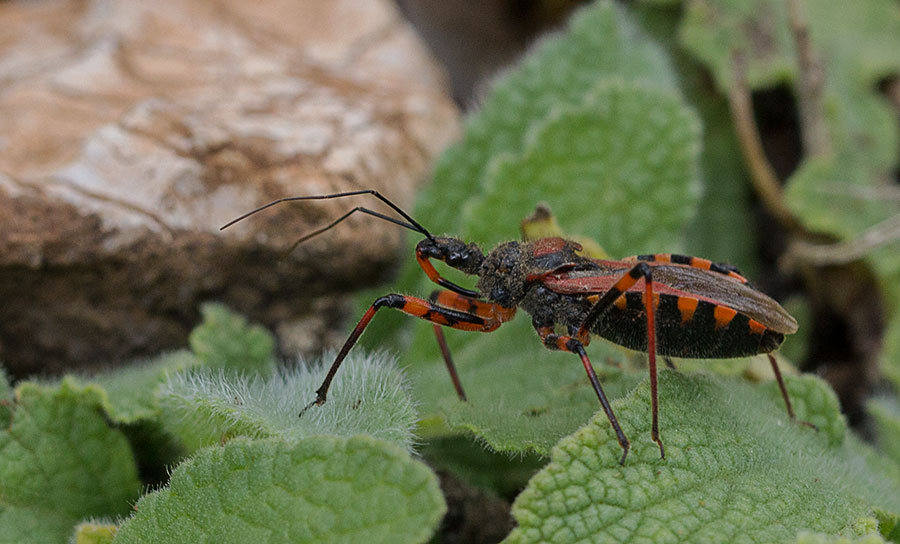
Red Assassin Bug, Rhynocoris iracaundus
Another guest was particularly pleased to find a Spotted Sulphur Moth, now considered extinct in the UK but previously limited to the Brecks. Meanwhile we found a Four-spotted Moth which was equally striking in its markings. On the way back to the vehicles it was established that the lovely Sage Skipper was still there but sadly had been caught by a cunning yellow Crab Spider which was busy devouring it – such is nature!

Spotted Sulphur Moth
We moved on to another roadside meadow the other side of Kleitoria for our lunch stop. Here there were a good number of enormous Illyrian Cotton thistles and before we had even parked there were cries of “Swallowtail!” as both Common and Scarce Swallowtails were feeding on the huge purple flower heads. A Hummingbird Hawkmoth was also zipping from one to the next while most bore beetles of one sort or another including Rose Chafer, White Spotted Rose Beetle and some more fine weevils.

Rose Chafer on Thistle bud
A Cetti’s Warbler called loudly from somewhere below us and among the flowers up the bank above were yet more butterflies including both Common and Chapman’s Blues, Great Banded Grayling and a lovely male Meleager’s Blue. A Balkan Marbled White was particularly obliging for photographs and another Sage Skipper was found. A few yards up the road one of our group came across a pristine pair of Brown Argus mating while Sooty Copper, followed swiftly by a Grecian Copper were spotted next to the vehicles.

Balkan Marbled White
I also found a rather pretty Dianthus species with gorgeous patterning on the petals. I have yet to identify it to species level but thought it worth sharing anyway!

Dianthus sp.
Having enjoyed our lunch in the sunshine we turned back towards the town and stopped by the river on the outskirts. We walked a short way down a side road following the course of the river and were rewarded with a variety of lovely things. Julian spotted what he thought was an unusual form of Cleopatra but by the time we had caught up from our dawdling enjoying the sun and the birdsong and looking at the plants it had disappeared into the ether. Not to be disappointed we carried on and were soon fascinated by a particularly large wasp, Megascolia flavifrons which was gorging itself on another large thistle flower.

Megascolia flavifrons and honey bee
The flower head next to it held a spectacular Violet Carpenter Bee and there were lots of other, smaller insects humming around too.

Violet Carpenter Bee
We were soon seeing butterflies too with a stunning Silver Washed Fritillary one of the first to be spotted. There were a few Odonata here too with both Beautiful and Banded Demoiselles as well as White-legged Damselflies. A Blackcap sang from the trees on the bank over the water and a small flock of Serins flew over. I also came across a small but striking moth sitting amongst the brambles on the riverbank.

Tineid moth, Euplocampus ophisa
Dropping into a small roadside meadow we came across Sooty Copper, Common Blue, Brown Argus and Spotted Fritillary.
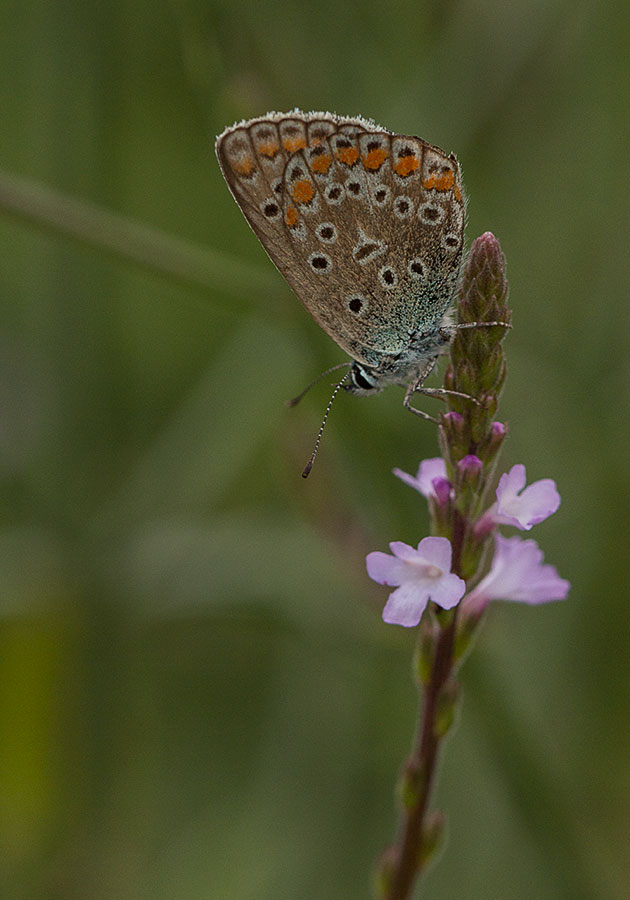
Common Blue on Vervain
A Southern Skimmer Dragonfly hung from a bramble leaf and there was a mass of Dodder too, which is an interesting orangey-yellow parasitic plant that winds itself around other plants.

Dodder, Cuscuta palaestina
Making our way back towards the vehicles we came across an Eastern Bath White, a Hummingbird Hawk-moth and a Sage Skipper.

Eastern Bath White


Sage Skipper
A large red and black beetle was also found face down in a thistle flower. Richard identified it as Trichodes apiarius, the Bee-eating Beetle, so named for the larval stage of their lifecycle where they parasitise solitary bees, eating their larvae.
One of our guests also came across an uncommon lizard behind the small spring, the Greek Algyroides which is endemic to the Peloponnese and a few outlying islands. Up a dry track nearby there was another Sage Skipper as well as both Meadow and Oriental Meadow Browns.

Meadow Brown on Spanish Oyster plant
A new Dragonfly was also found, a lovely yellow Small Pincertail.

Small Pincertail Dragonfly
Moving on once more we headed to a local spring for our last stop of the day where we hoped to find the endemic Greek Goldenring Dragonfly. Indeed we were barely out of the vehicles when the first individual was spotted. There were several patrolling the waters here and one of our guests even photographed one ovipositing in the calmer water at the edge of the main torrent.

Greek Goldenring Dragonfly
Along with the impressive Goldenring, several exuviae of which were found and collected, were smaller Spectre dragonflies and lots of Beautiful Demoiselles, the latter of which seemed to take a liking to those wearing hats as a novel perch.

Beautiful Demoiselle
The dragonflies were not the only interest here as there were Sooty Copper and Mallow Skipper as well as wonderfully shiny metallic green Mint Leaf Beetles and some lovely Longhorn Beetles too.

Sooty Copper

Mint leaf beetle
Well and truly satisfied at a good day of entomology, botany and ornithology we set out back to the hotel and another pleasant evening at a local restaurant.
The following day dawned sunny with just the odd cloud in the sky and we thanked our lucky stars that the peculiar weather seemed to have come to an end. Setting off after breakfast we found that once again the mountain top was in cloud but as there was so much blue sky elsewhere we were confident that with a little time it would burn off.
We continued down towards the Cave of the Lakes to the roadside meadows we had stopped in several evenings previously. Once again the patch of mint next to the buses was covered in butterflies, Brown Argus were most numerous with a couple of Common Blues joining them. A Cirl Bunting sang from a telegraph wire overhead while a Hoopoe called nearby. Great Banded Grayling and Lattice Brown flew overhead and Meadow Browns fluttered through the long grasses around us.

Lattice Brown
This morning, rather than scramble up the bank to the meadow above us we chose to walk on down the track to see what lay in wait in the fields beyond. We rounded the first corner and found the day’s first new butterfly of the trip sitting on a rusty fence wire, a Purple Hairstreak. A Ripart’s Anomalous Blue was next to be found and in a small, stony field Clouded Yellows flitted about while an Eastern Bath White and Balkan Marbled White fed on Illyrian Cotton Thistle flowers. One dying flower head held a colourful and likely endemic Bright Bushcricket.

Bright Bushcricket, Poecilimon sp.
There were some lovely flowers here although they weren’t immediately obvious as the surroundings were so dry that many were rather smaller than they might have been. Among them though, rarities in England such as Corncockle and Larkspur, as well as Common Poppies and Love-in-a-Mist. Felty Germander was prolific in places too and with it came a variety of butterflies and other insects such as the Hairy Flower Wasp, Scolia hirta.

Hairy Flower Wasp, Scolia hirta
Small Skippers were plentiful here and in another meadow, so were Mallow Skippers and Hermits, the latter seeming to prefer the thistle flowers too.

The Hermit
An Anomalous Blue was found and a probable Southern Grayling along with Chapman’s Blue, Small Heath and Zephyr Blue. The Hoopoe called throughout but didn’t make an appearance though a Sardinian Warbler did and so too did a large mixed flock of goats and sheep which were being moved through the meadows.
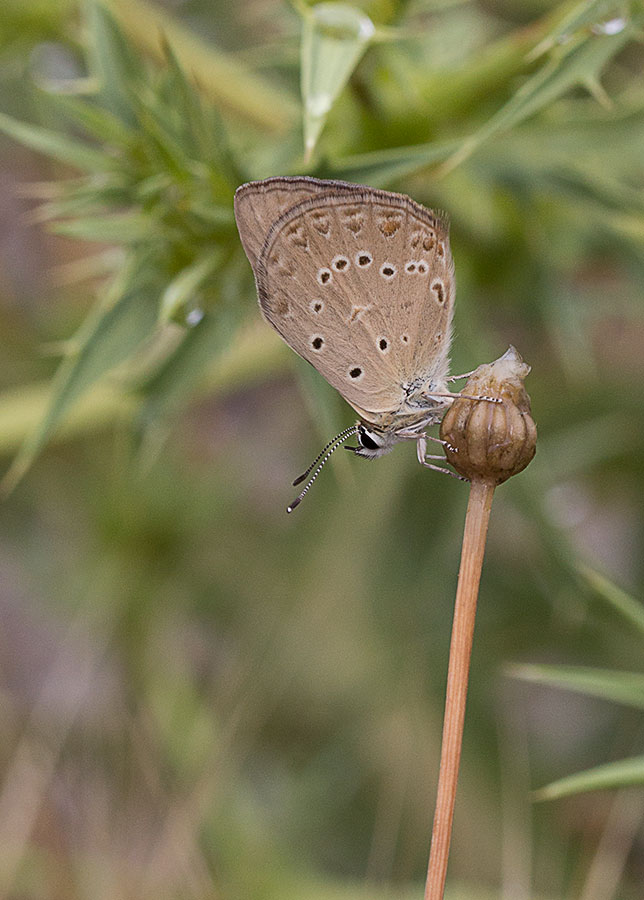
Anomalous Blue

Chapman’s Blue
Turning to make our way back to the vehicles a few of the group had a lovely clear view of a Southern White Admiral basking in the lower branches of a Spiny Pear tree.

Southern White Admiral
Just beyond we came across a huge and beautifully marked adult male Antlion.

Antlion
As we were climbing into the vehicles another new species to the trip, a Sloe Hairstreak, was found on that notorious patch of mint by our parking spot and everyone disembarked to photograph it before we moved on.

Sloe Hairstreak
Retracing our steps we headed uphill once more towards the ski centre. It was still not quite as bright as it could be and so we continued on into the Valley of the Styx and found a lovely spot to stop where a track led along the mountainside through meadows and rough scrub. The butterflies here were numerous and there were plenty of other things to see too. We began with a Large Skipper, another new species for the trip, and followed soon after with a rather unhappy Black-Veined White which I moved off the path and onto a flower with the hope it might recover.

Black Veined White
There was soon a call from Julian that he had spotted a Chequered Blue in the meadow over the rise and so we quickened our pace to join him. It had gone by the time we got there but there were Spotted Fritillaries and Clouded Yellows bombing all over the place in the heat of the morning and along with them, Common and Chapman’s Blues, Brown Argus, Balkan Marbled White and Large White. There was lots of wild Oregano here which the butterflies were particularly enjoying.

Brown Argus
A little further along a newly emerged Cicada was found, still green and soft with its exuvium beneath it on the grass stem it had chosen. Nearby a pair of mating Great Banded Graylings were found while a Southern White Admiral flew overhead. There were at least two species of Burnet moth visiting the Oregano flowers here too.

Great Banded Graylings
On the track, a Turquoise Blue posed nicely for the group to get photographs and a short way further on a Meleager’s Blue was spotted which would be the first of many with a mating pair found later too.

Meleager’s Blues
There were several Ripart’s Anomalous Blues nectaring on the fluffy white Felty Germander (Teucrium polium) growing down the middle of the track and a Grecian Anomalous Blue was spotted too. There was also a Greek Goldenring Dragonfly zooming about which seemed rather bizarre as there was no sign of any water nearby.

Ripart’s Anomalous Blue on Felty Germander
Reaching the end of the track where it dropped away at too steep a rate to continue we had lovely views of a female Silver Washed Fritillary and on the way back to the vehicles, we found a male as well.

Female Silver Washed Fritillary

Female Silver Washed Fritillary
We ate our lunches by the vehicles before retracing our route up the mountain. On the way back uphill, a snake crossed the road in front of Julian’s van. We all stopped and several people jumped out for a closer look but it had slithered beneath a bush not to emerge again and so we never did manage to identify it.
Our next stop was the first of three at consecutively higher altitudes to look for the elusive Chelmos and Oddspot Blues. We stopped beside the road and walked up a rough track to a gully where scree collected. There was a lovely clump of Narrow Leaved Valerian here and although it didn’t yield any butterflies, a Ripart’s Anomalous Blue was found nearby while higher up a Mountain Small White fluttered past. There were Ravens cronking and tumbling overhead and a small-flowered Wild Rose grew beside the track while a Woodland Grayling did its best to blend in with the rock on which it sat.

Wild Rose

Woodland Grayling
A little further up the mountain we stopped in a damp gully and found a number of Corn Buntings singing from the tops of the shrubby trees there. The butterflies we were hoping for were not to be found but we did see Silver Studded Blue and Oriental Meadow Brown. Julian also found a Dark Green Fritillary though many of the group didn’t manage to see it. There was a nice wild cornflower there too, Centaurea pichleri. Climbing back into the vans for the next stop, one of our more intrepid guests opted to walk and set off before we did as it wasn’t far.
He rejoined us soon after we disembarked the vans at our next stop. It was a rather windy and exposed spot but we felt that it was worth exploring as the sun was better here than it had been all week.
We hadn’t gone terribly far when the first butterfly was found, it wasn’t the local endemic we had hoped for but a Silver Studded Blue. This was the first of four, and the only butterfly species we found here. There were some lovely large beetles bumbling around though and the flora was very interesting. There were cushions of Thyme, the lovely Scabious, Pterocephalus perennis and pink flowered Spiny Thrift, Ancatholimon echinus (the food plant of the Odd Spot Blue) studded with sedums sporting both pale pink and yellow clusters of starry flowers.

Mountain flora
The lower slopes were tufted with endemic low growing, grey leaved Hawthorns, Crataegus pycnoloba and there were some lovely pale yellow endemic Toadflaxes here too, Linaria peloponneasiaca.

Linaria peloponnesiaca
We began to make our way back down towards Kalavryta and made an impromptu stop in a promising looking glade where Lathyrus grandiflorus and Ornithogalum narbonense were flowering. I came across a rather lovely looking Blister beetle and there were Meadow Browns and a couple of Blues flying about but it wasn’t quite what we were looking for and so we moved on.

Blister beetle. Mylabris quadripunctata
Our next impromptu stop was at another roadside meadow with a track through it. Here, we began with nice views of a male Red-backed Shrike on top of a low growing shrub. There were a couple of butterflies including Balkan Marbled White, Clouded Yellow and Common Blue but once again not quite the new and exciting species we were after. Having photographed a Cicada which sat nicely for everyone on the wooden post of a sign by the bus, we continued downhill.
Our final stop was only a short distance on from the previous one, another meadow down a rather steep bank but worth the effort of scrambling down into it. The few who stayed at the top didn’t miss out though and saw a number of species including an Eastern Baton Blue found by one of our guests.
In the meadow below there were several lovely bright green lizards though none stuck around long enough to be examined for identification purposes. There were lots of butterflies though including Brown Argus, Painted Lady and Hermit. One Small Heath defied its name a little by being rather larger than normal and a guest excelled herself by finding a stunning specimen of Lesser Fiery Copper.

Small Heath

Lesser Fiery Copper
In a gravel basin at the top of the slope there was Onosma erecta flowering and Crag Martins swooped over our heads.

Golden drops, Onosma erecta
It was soon time to wend our way back down the mountain but our wildlife viewing was not quite over yet as a pair of Short Toed Eagles was spotted circling overhead as we drove down the last stretch towards Kalavryta and a very small Hermann’s Tortoise crossed the road by the path to the memorial.
We spent our last evening at Grand Chalet watching the sun set over the gorge below us and eating delicious home cooked food.
Of course, being our last day, the weather was glorious! We packed up and set out in reasonable time saying our goodbyes to one of our guests before doing so as he was staying on. We headed back down to the bottom of the gorge at Diakopto and laid out our bait once more. Within moments there were Two-tailed Pashas dropping in to feast on the fermenting fruit and although a couple were a little tatty, there was at least one in excellent condition.

A rather worn Two Tailed Pasha
In addition to the stunning Pashas we also saw Berger’s Clouded Yellow, Holly Blue, Pygmy Skipper (our only of the trip) and both Freyer’s and Woodland Graylings. There were quite a few dragonflies and Damselflies around today too, plus numerous frogs on the edge of the river and several fine male Peloponnese Wall Lizards showing off their vibrant orange throats.

Greek Marsh Frog, Pelophylax kurtmuelleri

Male Peloponnese Wall Lizard
We were also able to show the Giant Peacock Moth caterpillar to those who had taken the train up the mountain earlier in the week. We discovered that there were in fact two in the same bush – how we had missed the second which was a similar size to the first, we will never know!

Giant Peacock Moth caterpillar
On our way to this spot, one of our guests who has a keen interest in jumping spiders came across a rather splendid red and black male Philaeus chrysops which had been sitting on the shoulder of another guest in the minibus. We were able to release it in a suitable spot for photographs and after a wonderful time pottering around in the sunshine, we set off towards Athens for the last leg of our journey.

Male jumping spider, Philaeus chrysops
As we were doing well for time, we made a stop at the Corinth Canal where we ate our packed lunches and took in the staggering engineering of the canal which had been dug by hand. We watched a pair of Lesser Kestrel flying back and forth over the dry meadow at the top of the deep channel and soon had to leave for the airport. We dropped a few of our guests at Arrivals to make their onward journeys into the city before returning the vehicles and bidding our farewells.
A total of 78 species of Grecian butterflies were seen during a very enjoyable week, and despite the extraordinary unseasonable rainy weather. Our guests were all charming and I thoroughly enjoyed working with both Julian and Richard, finding the trip both a rewarding and fascinating experience. I can’t wait to lead again for Greenwings in the future and I look forward to telling you about my upcoming adventures soon!