Outer Hebrides Heaven
I’m back from my latest adventure – I hope you enjoyed Ryan’s guest post while I was away? As I mentioned before I left, Scotland holds a special place in my heart and is a part of the world that I’m particularly familiar with, having been a great many times. This year though I was able to explore an area that I hadn’t visited before: the Outer Hebrides or more specifically, the Isles of Lewis and Harris.
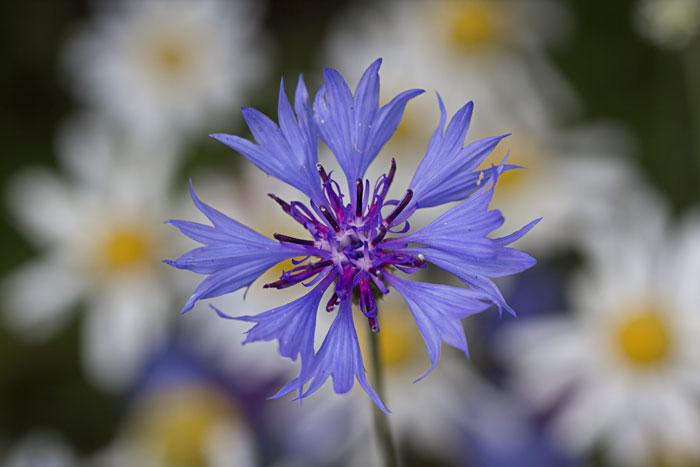
We took a couple of days to drive up to the Isle of Skye where we made a few brief stops at some of our favourite spots on the way. One un-planned roadside pause for me to photograph some lovely light on the hills between the Old Man of Storr and the Quirang, led to some lovely plant discoveries. Firstly a pristine Devil’s Bit Scabious.

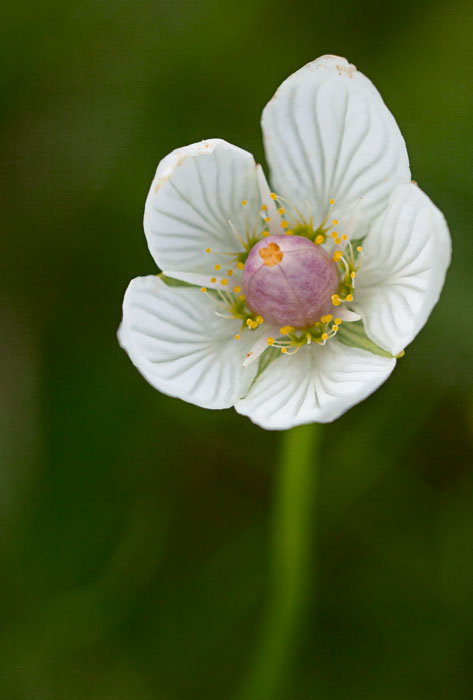
We had seen plenty of this lovely little flower which has button shaped blooms that start out looking like perfect pale purple blackberries before the buds burst. Finding them in such good condition, however, is often more tricky. The other flower I found was one that we hadn’t seen much of until now and which I am particularly fond of, Grass of Parnassus. There is a definite appeal for me in the delicately veined petals and pink centre. It isn’t actually a grass at all but I can forgive such a misnomer when the flower is so pretty!
Having crossed the Quirang to admire the views we caught the ferry across the Minch from Uig to Tarbert on Harris. I was pleased that the weather was good and the crossing was a calm one. I spent a while out on the viewing deck from where I spotted a breaching Porpoise – what a start to the trip! Sadly despite my best efforts I didn’t capture the moment on camera, but having never seen one before I was pretty happy nevertheless.
Arriving in Tarbert we began the journey to our cottage which was to take us north towards Stornoway. The area around Tarbert itself is quite mountainous and the scenery was wonderful. This was one of the first views having left the harbour.

Driving further north we passed a small sign that welcomed us to the Isle of Lewis. I should perhaps mention that Lewis and Harris, despite being referred to as separate islands, are actually separate halves of a single island which is the largest in Scotland. The terrain in Lewis was quite different to Harris, with much less bare rock and significantly lower hills rather than mountains. We found the cottage tucked into the side of a hill overlooking a pair of lochs and spent the evening settling in.
The following morning we braved clouds of midges and set out to start our exploration. With only a few days on the island we had plenty to fit in! We set out west and headed for Uig (another hebridean village with the same name!). The weather was not quite so sunny this morning but the clouds did part occasionally and lit the landscape in patches which was rather pretty. Our first stop was a brief one on the roadside to take a quick snap across the sea loch.

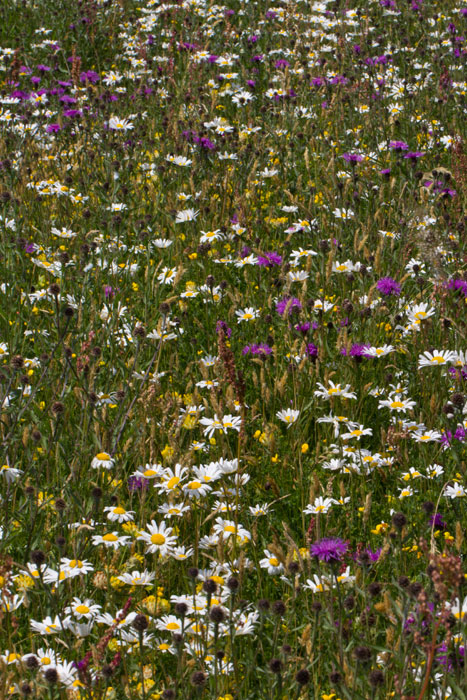
Further round the little peninsula, we drove across an open area at the back of a dune system and I suddenly realised that this was no ordinary spot. This was in fact the best area of machair that I could possibly have hoped to find. I found a place to park up and we got out to investigate. The flowering season is almost over by now but, being a little behind much of the mainland, there was a surprising amount to see. Here is a slightly wider shot of what we had come across.

Looking more closely there were the obvious Devil’s Bit Scabious and Harebells. I love the colour of both and there is something enchanting about the delicacy of a Harebell that makes me think of childhood books full of Flower Fairies. The drizzle had stopped thankfully but left a fine mist on many of the flowers.

There were plenty of Yellow Rattle seedheads as well and Lady’s Bedstraw amongst others. There were a few different orchids too which were well over, but then we spotted an unexpected beauty which I’ve never seen in the UK before: a Frog Orchid! It is so named because the shape of the bottom lip is said to look like a frog as seen from above with its legs tucked in.

I was thrilled that we had found something so uncommon so quickly. My happiness was not short-lived as we came across another stunning flower, and this time it was one that I’ve never found before! The Field Gentian is similar to many species I’ve seen in the Alps over the years, but has clusters of flowers up a taller stem, which are more purplish than their vivid blue Alpine counterparts.

Having wondered at the beauty of the machair and chased some interesting bumblebees around without much success of photographing or identifying them, we were forced back into the car as the drizzle began again. We continued our amble along the coast and around to the small island of Great Bernera which is connected by a bridge. We had a picnic lunch overlooking the sea before moving on once more.
The next stop was the last of the day and one I had longed to do for some time: the Callanish Standing Stones. I had hoped to capture some nice photos but due to slightly poor weather, my wide angle lens misbehaving and another onslaught of midges, I settled for a few close-up texture shots and a couple of other bits and pieces with a longer lens which I may share another time. I found that the stones themselves were particularly tactile and had a beauty all of their own. I’d have liked to stay longer and especially to have got some better images but as I often say, you have to have a reason to go back!
The following day we headed north and went for a wonderful long walk on the beach at Tolsta. White sand never fails to bring a smile to my face. We were also astonished to find quite a number of Primroses flowering there – yes, I said Primroses in September!! Following a picnic lunch a little further up the road we spent a while watching Stonechats on the heather around us, and I captured this gorgeous juvenile sitting on a small rock.

From there we went on up to the very top of the island, the Butt of Lewis. We had a blustery walk around the lighthouse there and watched squadrons of Gannets being blown around the clifftops before returning to our cottage.
Our last full day on the island began with the decision to drive down to Harris and explore some of the legendary beaches there. We couldn’t have picked a better day for it weather-wise. This shot was one of the first stops we made at Luskentyre. It took my breath away, I could hardly believe we were still in Scotland!

You may have guessed by now that I simply adore the coast. I have an ever growing seashell collection and can’t help but add to it every time I visit a beach. A particular joy for me was to stumble on a small bay which was full of cowrie shells, an absolute favourite. Having put a couple in my pocket and soaked up the sea breeze we drove on to the very bottom of the island. We didn’t actually stop in the end, as we were due to visit a friend who was doing up a cottage in Scarasta, but the scenery made for an enjoyable drive.
The afternoon was spent driving along a small side road which leads to Hushinish. Someone told me that the road was “character-building” I’m not so sure about that if taken at a slow pace, but I think my neck may have lengthened by an inch or two from straining to see over the bonnet on the many blind summits! It was worth it though as we were greeted by another beautiful beach at the end of the road. I also finally had an opportunity for some more wildlife shots as there were some waders on the beach.
The main group were Sanderling which almost look like they run on clockwork, as their little legs seem to move in a blur when they are scurrying around after insects in the sand.

They are feisty little birds too and constantly harassed the few Dunlin that joined them on the tide line. These are one of my favourite waders. They are so tiny and have beautiful patterning in their feathers. This individual had just been delving its beak deep into the sand after a prey item.

One particular favourite Dunlin image that I captured is my Image of the Month for September. These little birds forage amongst seaweed along the shoreline for small insects, molluscs and other morsels of food. They also go through tiny pools of water where they drag their feet to dredge up food that lies just under the surface of the sand. This one had just been through a patch of sea foam doing this and emerged wearing what looked like tiny foam slippers!

This encounter was especially wonderful as I was lying on the sand and this gorgeous bird came so close that I could have reached out and touched it. I love wildlife photography but even more so, I love close encounters with wild creatures like this.
The final morning on the island we left the cottage early to enjoy Luskentyre in all its glory once more, before catching the ferry back to Skye. A walk on the beach in the fresh air was only topped by seeing Common Dolphins from the ferry back over the Minch. I definitely fell in love with the island and have no doubt that there will be many more Hebridean adventures to be had in the future! If you’ve enjoyed reading about my trip and think you’d like to visit, there’s plenty of great information on the Outer Hebrides website.
SaveSave